State of Alabama and Developer Partner to Relocate Gopher Tortoises in Baldwin County
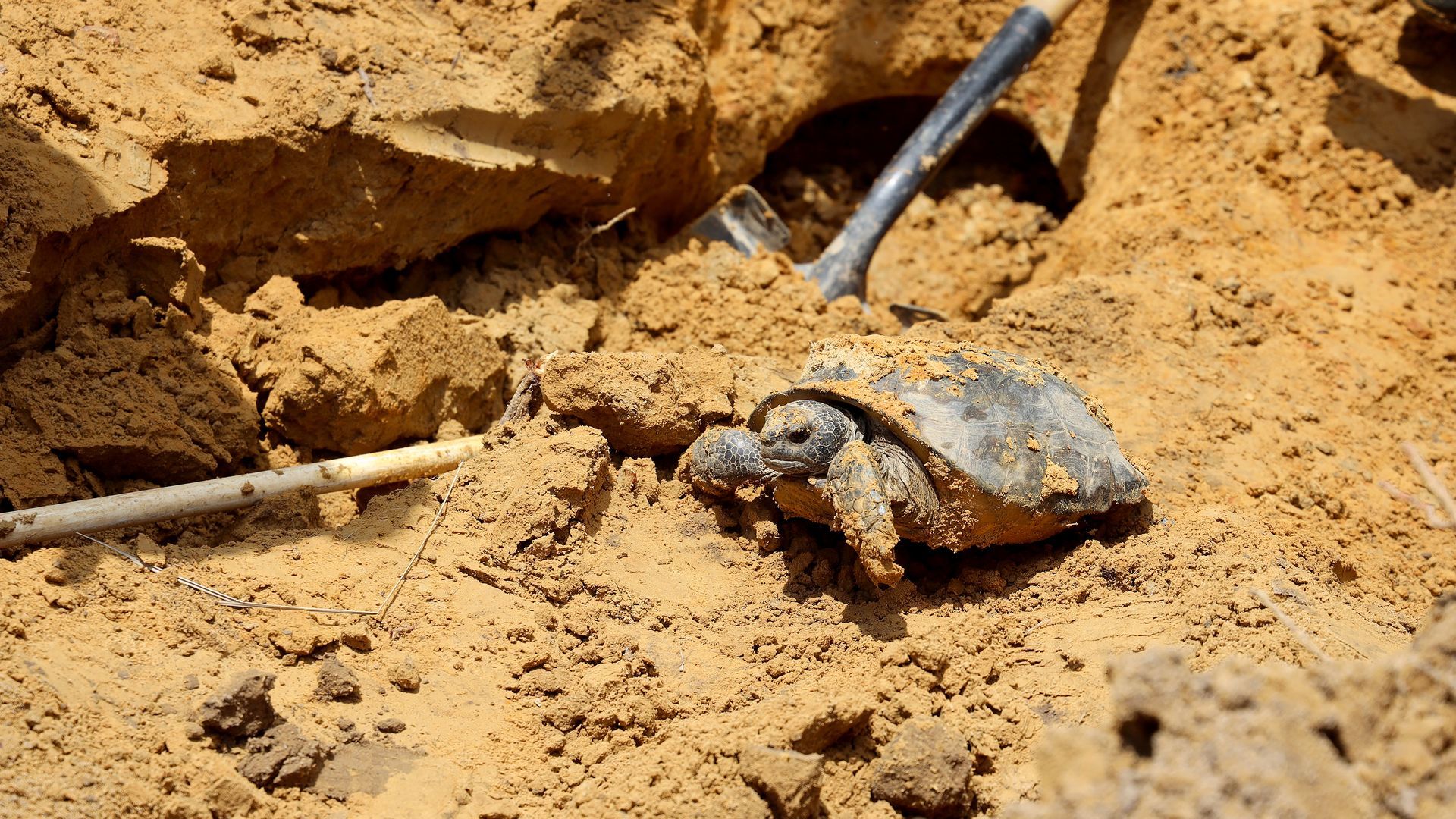
Tortoises were relocated to a protected habitat within their natural range.
Baldwin County, Ala. — (OBA) — A private developer worked with state wildlife officials to safely relocate several gopher tortoises in Baldwin County. The project shows that construction can proceed without putting protected species at risk. State officials say the effort highlights better coordination between regulators and builders and could serve as a model for future development along Alabama’s coast.
The work took place during a 90-day pre-construction period leading up to site development at The Reserve in Daphne. During that time, environmental teams identified and secured tortoise burrows before any land disturbance began. Wildlife officials were then called in to assess and plan relocation. The process concluded before construction activity started.
The site had seven burrows, six of which were actively occupied. Crews set up a 25-foot buffer and installed a silt fence to protect the area. Using heavy equipment with care, they excavated burrows as deep as eight feet and safely removed each tortoise without injury.
Wildlife and Freshwater Fisheries staff examined the animals after removal. Each tortoise was weighed, measured, and prepared for transport. The animals were then transported to the Perdido River Wildlife Management Area in eastern Baldwin County. The site provides a suitable habitat within the species’ range.
State officials say the gopher tortoise plays a key role in the ecosystem. More than 360 species rely on its burrows for shelter at some point in their lives. Protecting the tortoise also benefits other wildlife, including the Eastern indigo snake. This makes relocating the tortoise a priority when development occurs.
To help the tortoises adjust, crews built a temporary enclosure called a waif pen. The enclosure prevents the animals from returning to their original site. Over time, the tortoises come to regard the new location as home. After about a year, the fencing is removed.
The relocation also included support from the developer. Funding was provided for fencing materials and equipment to secure the enclosure. Officials say this type of cooperation is increasingly common. It allows projects to proceed while still meeting environmental standards.
State leaders cited the project as an example of balancing growth and conservation. Public lands play a key role by providing safe habitats for relocated wildlife. Officials encourage other developers to adopt a similar approach. They say early coordination can prevent delays and protect sensitive species.
A similar effort is already underway at another Daphne site. There, tortoises were relocated to land donated for conservation. Environmental reviews are now a standard step before development begins, helping identify protected species early.
Wildlife managers say their broader goal is to maintain healthy ecosystems, not just individual species. Habitat management supports a wide range of native animals. In coastal Alabama, this often begins with preserving longleaf pine ecosystems. These habitats remain critical for species such as the gopher tortoise.
Share this article w/ Friends...