The Sargassum Washing Ashore May Be More Valuable Than You Think
From a sea turtle nursery to a dinner plate, sargassum is proving far more useful than it looks.
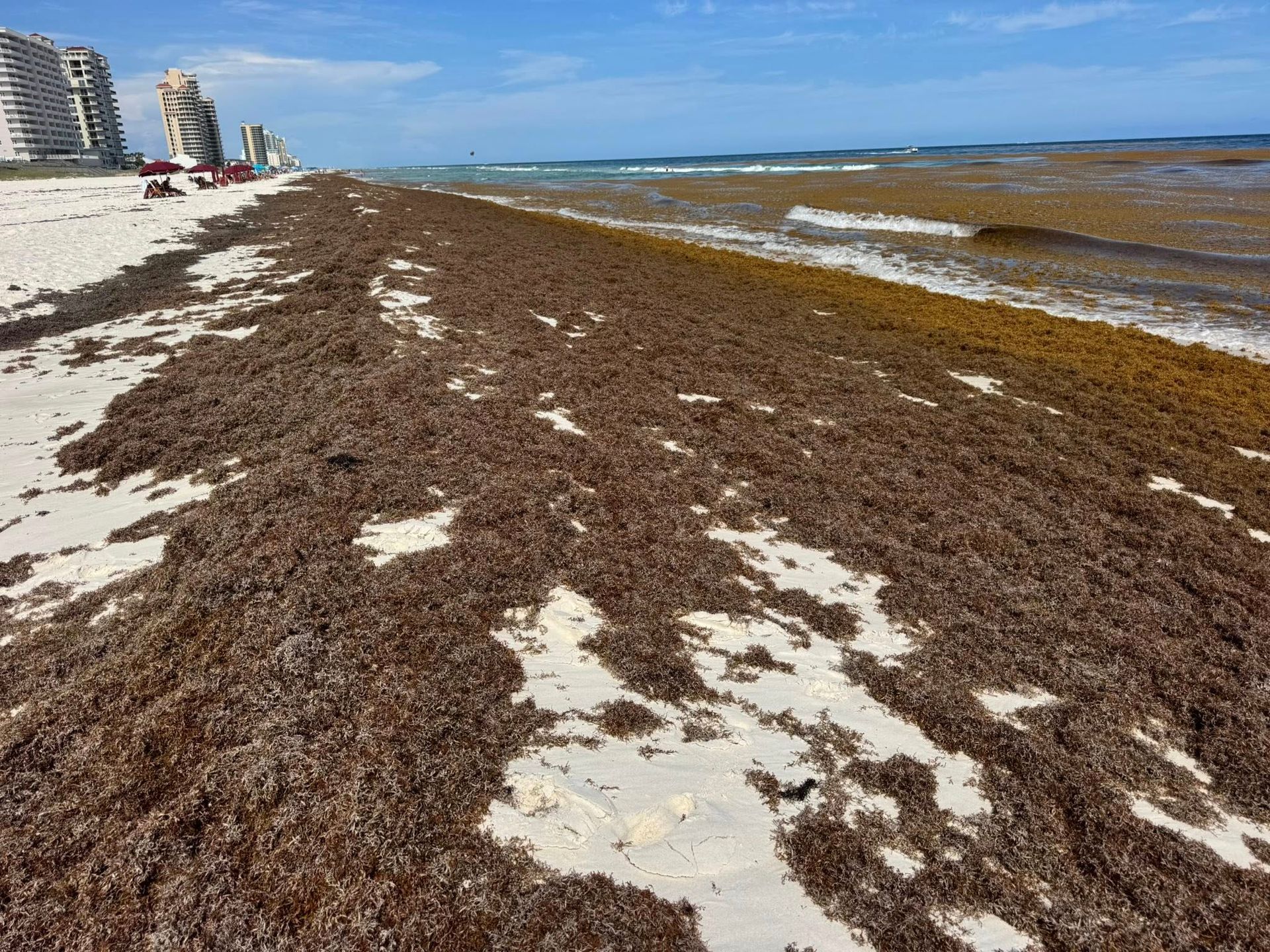
Orange Beach, Ala. — (OBA) — Every spring, a brown wave of seaweed begins moving toward the Gulf Coast and Atlantic beaches. It smells like rotten eggs, piles up on the sand, and leaves tourists frustrated. But scientists and conservationists say sargassum is more complicated than it appears. There's a reason some people are fighting to protect it.
Sargassum typically begins washing ashore along the Gulf Coast and Atlantic beaches from May through late August, with peak arrivals in June and July. In 2025, the Atlantic saw record-breaking blooms, and 2026 is on track to be even worse, according to AccuWeather. Scientists at the University of South Florida have been tracking the blooms since the trend began to escalate.
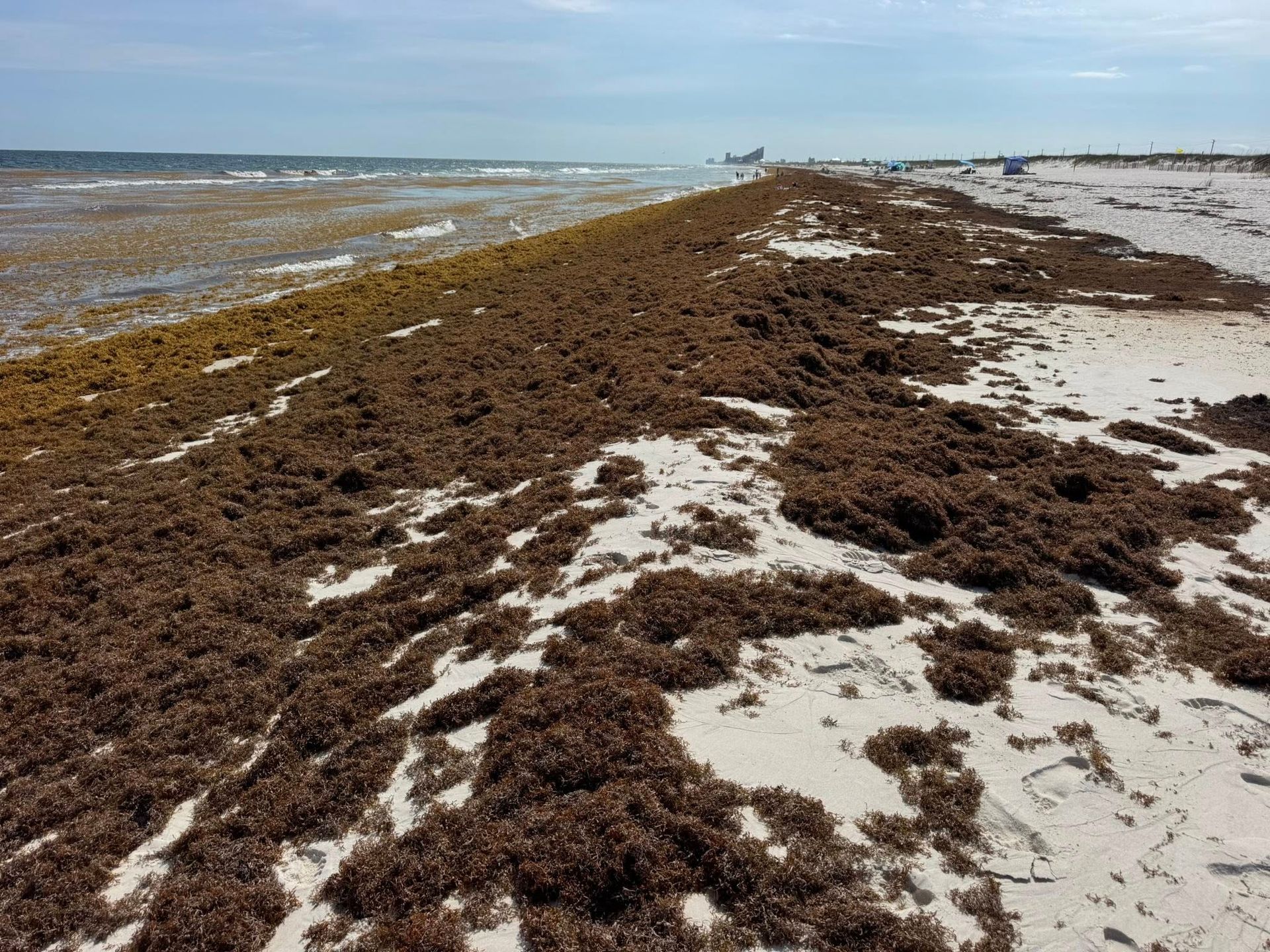
So where does it all come from? Sargassum has floated in the Atlantic for millions of years, mostly confined to a region known as the Sargasso Sea. Between 2009 and 2011, however, unusual wind patterns pushed the seaweed south into warmer, nutrient-rich waters. It thrived there, forming what scientists now call the Great Atlantic Sargassum Belt — a mass roughly 5,000 miles wide that stretches from West Africa to the Gulf.
Not all beach seaweed is the same, and sargassum is often confused with what Gulf Coast beachgoers call June Grass. June Grass — technically
Cladophora — is a bright green algae that forms slimy mats in warm, nutrient-rich waters. Sargassum is brown, structured, and built to float, with tiny gas-filled bladders that keep it on the surface. June Grass is mostly a swimsuit-filling nuisance; sargassum is a traveling ecosystem.
A new study from the University of Miami traced the modern bloom's origin not to the Sargasso Sea but to the
Gulf of Guinea off the West African coast. Cooler water temperatures and stronger ocean upwelling in 2009–2010 created conditions that enabled sargassum to grow rapidly. Saharan dust and river runoff added extra nutrients, further fueling growth.
Ocean currents carry it west and north, where it eventually reaches the shores of Mexico, the Caribbean, Florida, and the Gulf Coast. By the time it arrives, it's no longer floating freely — it's piling up in thick, dark mats.
In 2026, Mexico's Navy deployed 13 ships and 191 personnel to intercept it before it reached tourist beaches.
Despite the trouble it causes on shore, sargassum does real work in the ocean. Baby sea turtles hide in the floating mats after hatching, using them as shelter from predators. The seaweed also supports crabs, shrimp, fish, seahorses, and tiny organisms that form the base of the food chain. Groups like
Share the Beach have worked to educate beachgoers about sargassum's role in the ecosystem.
When it washes ashore in smaller amounts, sargassum is useful. It traps sand and slows beach erosion during storms. As it breaks down, it returns nutrients to the soil, feeding dune plants and coastal wildlife. The problem isn't that it arrives — it's that it's arriving in record quantities, smothering the shoreline.
Once sargassum begins to rot, it releases hydrogen sulfide and ammonia, which cause the rotten-egg smell. These gases can irritate the eyes, nose, and throat. Prolonged exposure may trigger respiratory issues, and the decomposing seaweed can also absorb arsenic and heavy metals. Health professionals advise keeping children away from large piles of it.
Weather.com reports that the smell alone has driven tourists away from entire stretches of coastline.
What surprises many people is that sargassum is actually edible — with the right preparation. It has been eaten in Asia for centuries, where it's known as hijiki and akamoku. It has a bitter, slightly salty, earthy flavor.
Eat the Weeds describes it as an acquired taste, noting that the leaves, stems, and small air bladders are all edible.
Preparation methods vary widely. Some people boil it in soy sauce, then simmer it with tofu or fish. Others fry it in tempura batter, steam it, or cook it in coconut milk. In Hawaii, it was historically mixed with raw fish or dried into chips. In parts of Indonesia, it's dropped into boiling water for one minute and served with an allspice-based dipping sauce.
One key step before eating it: reduce arsenic levels.
Foraging Texas recommends boiling the seaweed in two or three changes of water, then soaking it in a citric acid solution for six hours, and finally lacto-fermenting it. It's a long process, but for those who gather it regularly, the effort can be worth it.
Cayman Compass reported on a chef who stripped the leaves from the stems before cooking — similar to how you'd pull rosemary needles — and then roasted the leaves alongside fish. The consensus is that younger leaves, not the woody stems, provide the best texture and flavor.
Some communities are looking beyond the kitchen for solutions. Grenada is turning sargassum into biogas and fertilizer. Entrepreneurs in Mexico are incorporating it into building materials and sandals. Researchers are exploring its use as a soil amendment and as biochar for carbon sequestration. Seaweed fouling beaches may end up having more uses than the problems it creates.
For now, the season is here. If you're heading to a Gulf or Atlantic beach this summer, check NOAA's CoastWatch or the
Optical Oceanography Laboratory for sargassum forecasts before you go. Many resorts remove it quickly, but it's worth knowing what you're looking at—not everything that washes up on shore is just trash.
Share this article w/ Friends...