City Of Foley Partnership Lifts Performance At Area Schools
Principals credit city funding for hiring part-time instructors and cutting absenteeism while raising test scores.
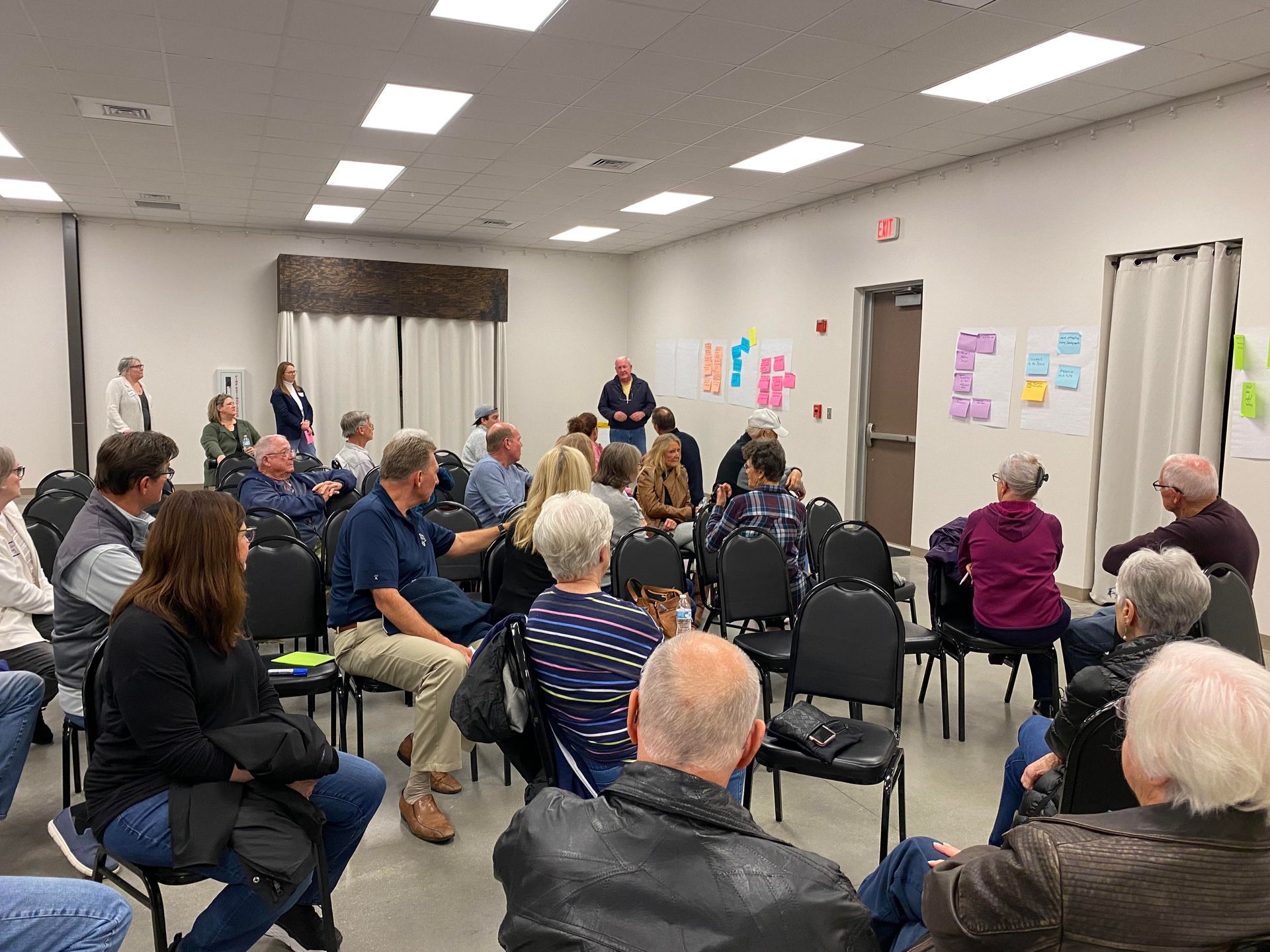
Foley, Ala. — (OBA) — City and school leaders in Foley say a local partnership is helping every public school in the area improve. The Foley City Council, the Foley Education Advisory Committee and Baldwin County school officials met recently to review the progress. Principals from six schools in the Foley feeder pattern described how extra city money is being used. They said the added support has helped both students and teachers.
In the last year, state ratings for all Foley area public schools moved up. For the first time, all five schools received a B on the state report card. Officials said this marks a major step forward for the Foley feeder pattern. They also pointed to improvement over the last three years in individual school scores.
City financial assistance is one reason for those gains, according to educators who spoke to Foley representatives. The City Council budgeted $300,000 to be distributed to Foley area schools, with the funding passed through the Foley Education Advisory Committee, known as FEAC. Foley began the program to provide additional funding three years ago.
Mayor Ralph Hellmich said the city’s goal is to help each school address its own needs. “Each school is unique and they have unique challenges. The Baldwin County Board of Education does an incredible job supporting all of our schools,” Hellmich told educators. “We supplement that. That's what we hope to do. I want to thank you for the partnership that you've allowed us to do. I think it's made a difference.”
Baldwin County Superintendent of Education Eddie Tyler said Foley educators are focused on student achievement. “They are dead serious about moving the needle, the academics helping kids,” Tyler said. “It's all about the leadership. I guarantee you, we've got some of the best leaders in our school now. I'm very proud and excited about that.” He said the school system will “continue to support our schools here in Foley” and is “extremely proud of what's going on in Foley.”
Schools in the Foley feeder pattern include Foley High School, Foley Middle School, Foley Elementary School, Florence B. Mathis Elementary School, Magnolia Elementary School and Swift School. Over the last three years, each campus has raised its report card score. Foley High School increased from 70 to 80. Foley Middle School rose from 68 to 81, the biggest jump among the group.
Florence B. Mathis Elementary improved from 79 to 83 during that period. Foley Elementary climbed from 79 to 85. Magnolia Elementary went from 77 to 83. Swift School advanced from 78 to 82. Principals said those numbers reflect both district support and the targeted use of city funds.
FEAC chair JaNay Dawson said the results show the local partnership is working. “This is indicative of the work of the principals of your schools and the teachers that are in your schools, and the extra people that they hire to make sure they get where they need to be,” Dawson said. She noted that “the city of Foley and the Baldwin County Board of Education agreed three years ago to enter into a partnership to provide extra support to focus on academics and arts.”
Dawson said many schools used the extra money to hire part-time instructors, but each campus decides what it needs most. “We are not a committee that tells principals what they need to do,” she said. “Our job is to give them money specifically for specific needs in each of their schools.”
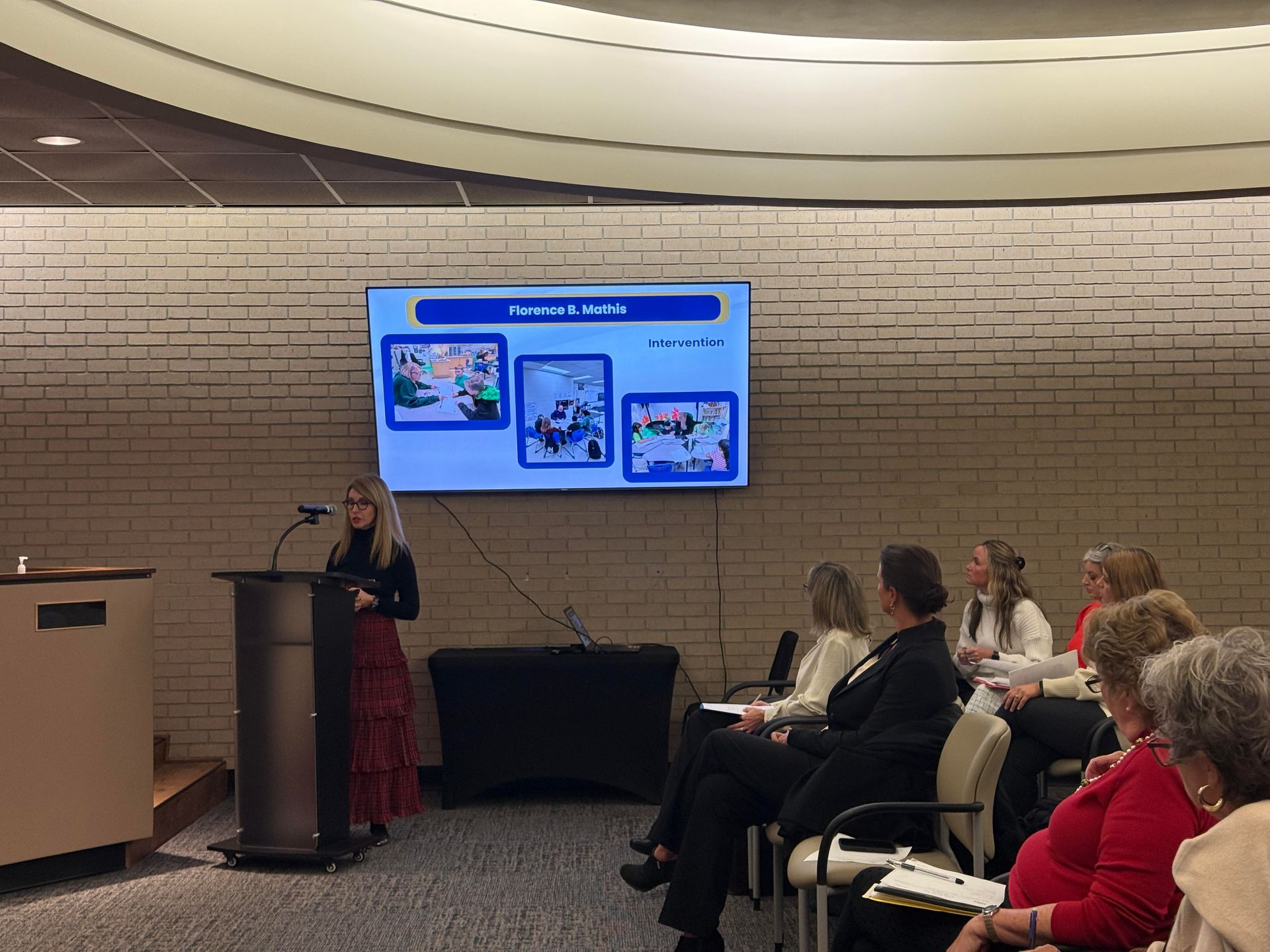
At Florence B. Mathis Elementary, Principal Gina Gipson said part-time instructors, known as PTIs, have helped raise reading scores and cut chronic absenteeism. “Our students are learning more, growing faster and showing strong academic progress across multiple areas,” Gipson said. “FEAC has supported Mathis in many ways. We have initiatives that have been put in place. You have people that have been put in place due to this funding.”
Foley Elementary Principal Brooke Waters said city support has helped even as the share of special education students and English learners has grown. “Your investment has allowed us to strengthen our school in ways that directly benefit students every single day at Foley Elementary,” Waters told City Council and FEAC members. The school now has seven PTIs, most of them retired Baldwin County teachers working directly with students.
Waters said the school chose that approach because of research on learning. “We chose this approach because research is clear that the most effective way to help students grow academically is through direct, explicit teaching,” she said. “When a trained teacher is working closely with the child in a small group or one-on-one setting, learning is going to happen faster and more consistently. Our PTIs make this little support possible.”
Magnolia Elementary Principal P.J. Sute said Foley funding allowed the school to hire a math intervention teacher and a part-time behavior intervention teacher. Magnolia also has funding for a special education intervention teacher to be hired. Sute said chronic absenteeism at the school has dropped from as high as 19 percent to less than one percent.
“We definitely credit this to the attendance incentives that the advisory committee helps support us with,” Sute said. “We're not sending those kiddos home anymore. It's related to our behavior interventionist. She's here. We get to keep those kiddos on campus.” Sute added that while Magnolia is not inside Foley’s city limits, the school still feels included.
“I wanted you to know how wholeheartedly grateful we are for all of the support that you give Magnolia School,” Sute said. “It truly means the world. Obviously, we are not in city limits, but we are Foley Lions. Our kiddos go to Foley schools. So it just means everything to us to be included in this committee and to have your support.”
Swift Elementary used part of its city funding to buy Vox books for students learning English as a second language. The books are read aloud in Spanish and English to help children with both language and reading. Principal Lynn Smith said the resources make a difference for students who are new to the country and to the school.
“They feel different. They don't feel safe,” Smith said of those pupils. “So one thing that y'all helped us purchase are these Vox books. They look like real books, but they read them to the students, and they're in Spanish and English, so they look like they're doing their work and they're learning both languages.” Smith said part-time instructors hired with FEAC money have also helped Swift’s grades and scores improve.
“I'm just very proud of our scores,” she said. “We could not do it without you. So thank you very much for supporting us.” At Foley Middle School, Principal Katy White said scores in English as a second language, reading and science have all increased, along with attendance rates, with help from city funding.
Foley Middle School’s 13-point increase on the state report card was the highest for any Foley area school. White said FEAC support has also allowed teachers to attend conferences and bring back new ideas for classrooms. The school has expanded programs that recognize student achievement and encourage continued progress.
“Without the support of this community, Foley Middle School would not be where it is today, and I could not be more proud of them,” White said. She credited both the city and the school system for backing those efforts.
At Foley High School, Principal Jessica Webb said city money helped the school expand college test preparation, especially for the ACT exam. “I'm really proud, with your help this year, that we were able to test all of our 10th graders with our 11th graders,” Webb said. She said that by the time this group of 10th graders becomes 11th graders, many will have taken the ACT three times.
“For many of them, this will be their third time taking that test. That didn't happen before. It was the first time,” Webb said. “So we're really excited that we've been able to offer that for our kids through our prep sessions and additional ACT exams for kids.” She said Foley High School and other campuses plan to keep building on these gains.
“Thank you for everything you do,” Webb told council members. “Thank you, Mr. Tyler, for partnering with FEAC. As you can see, this has really elevated our schools and what we can offer our kids and help our kids. Every school is different and our needs are different, but our committee does a great job of listening to us and supporting us in what we need. So it's been awesome. Thank you.”
Share this article w/ Friends...