Gulf Coast Waters Home To Dolphins, Not Porpoises
NOAA Fisheries outlines differences in size, fins, and behavior.
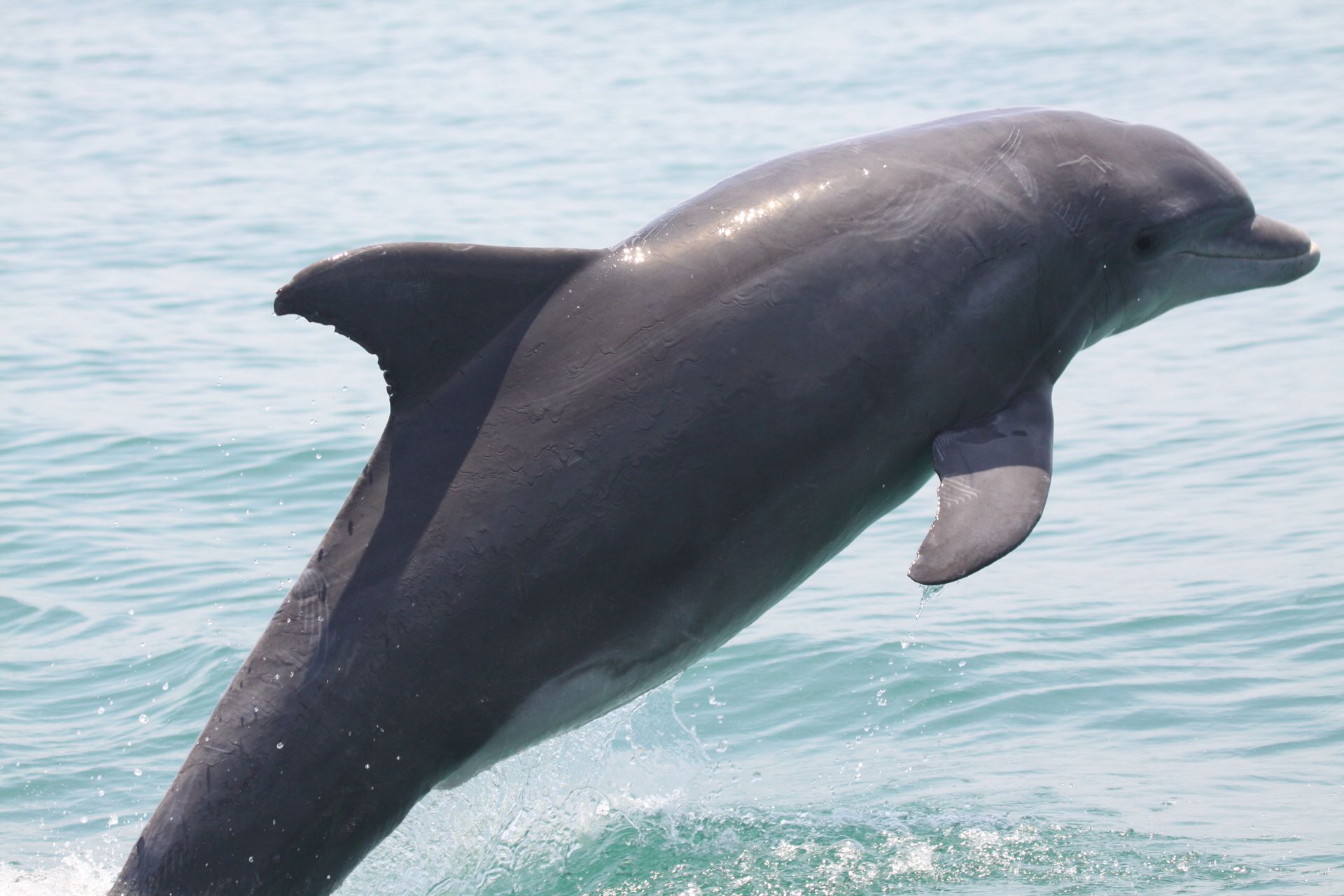
Orange Beach, Ala. — (OBA) — Visitors to the Alabama Gulf Coast often spot marine mammals swimming near shore or alongside boats. Many people call these animals porpoises, but that is not accurate. According to NOAA Fisheries, the animals commonly seen in local waters are dolphins. The agency says dolphins and porpoises may look similar, but they are different species with key differences.
In a recent
NOAA Fisheries article, they explain that dolphins and porpoises are both cetaceans, a group of marine mammals that also includes whales. They are also classified as toothed whales, known as odontocetes.
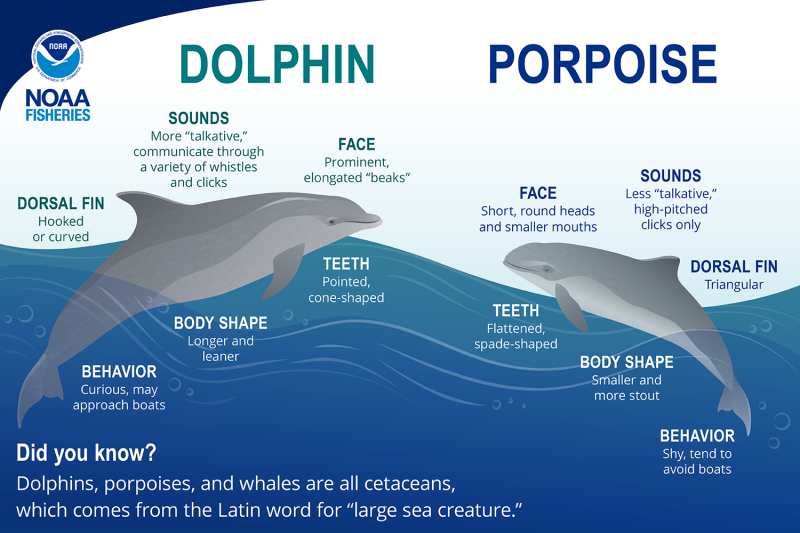
NOAA Fisheries said both animals use echolocation to find food, communicate, and navigate. They must also surface to breathe. However, NOAA Fisheries noted that physical traits and behavior can help people distinguish them.
Along the Alabama Gulf Coast, NOAA Fisheries information and marine research indicate that porpoises are not found in Gulf waters. Instead, porpoises typically inhabit colder coastal waters in the Atlantic and Pacific Oceans. These animals are more common in northern regions and are rarely seen in warm waters.
NOAA Fisheries said dolphins are the marine mammals most often seen in Gulf waters. Dolphins have longer, leaner bodies and curved dorsal fins that resemble a hook. Their faces feature a noticeable, elongated beak.
The agency said dolphins also have pointed, cone-shaped teeth. NOAA Fisheries described dolphins as social and “talkative,” communicating with clicks, whistles, and other sounds. They are often seen traveling in groups called pods.
NOAA Fisheries says nine different species of dolphins live in the Gulf of Mexico. Only three species, including the bottlenose dolphin and the Atlantic spotted dolphin, inhabit shallow nearshore waters. The agency advises people to stay at least 50 yards away for safety.
Porpoises, NOAA Fisheries said, have smaller, more compact bodies. They have triangular dorsal fins and short, rounded faces. Their teeth are flat and spade-shaped, which also helps set them apart from dolphins.
NOAA Fisheries said porpoises tend to be shy and avoid boats. They are less social than dolphins and do not vocalize as much. Instead, they use high-pitched clicks that humans cannot hear.
NOAA Fisheries said that both dolphins and porpoises are protected under federal law, including the Marine Mammal Protection Act. The agency reminds the public to observe marine life from a safe distance and to report injured animals to trained responders.
Share this article w/ Friends...