Colorado State Lowers 2026 Hurricane Forecast, Again
Colorado State University now expects one of the quietest Atlantic hurricane seasons in more than a decade.
Orange Beach, Ala. — (OBA) — Colorado State University has lowered its forecast for the 2026 Atlantic hurricane season again. Researchers now expect one of the least active seasons in more than a decade. The updated outlook predicts far fewer named storms and hurricanes than average. Forecasters say shifting climate patterns are making conditions less favorable for tropical development.
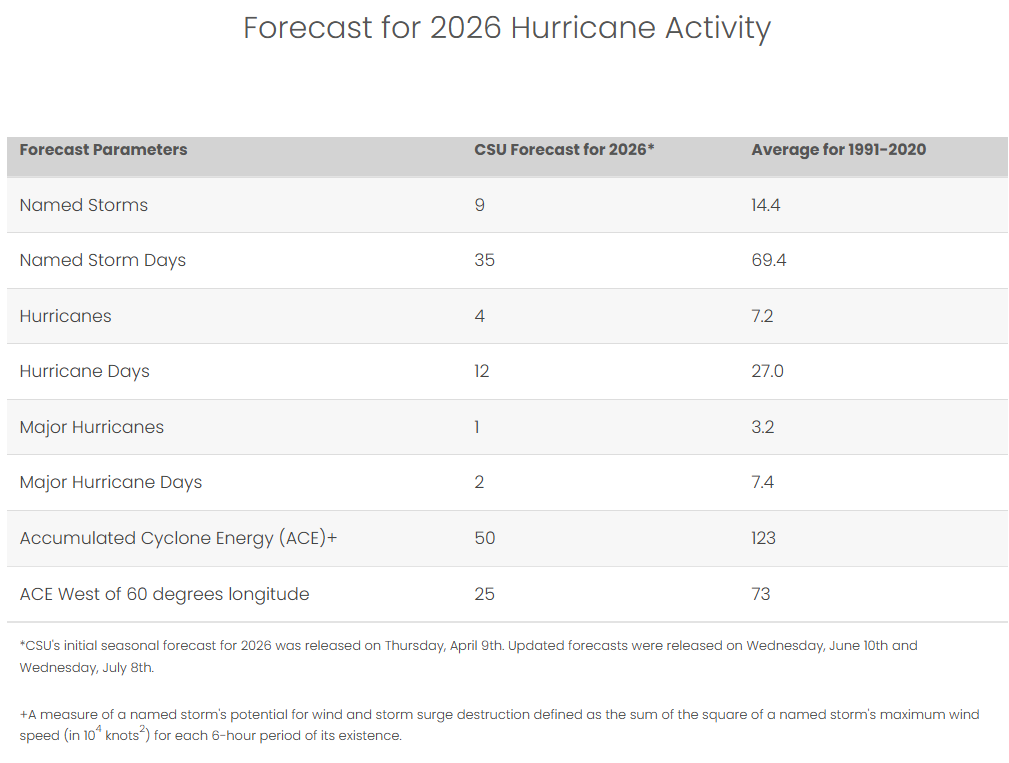
The most recent forecast was released on July 8, 2026, by Colorado State University's Department of Atmospheric Science. The Atlantic hurricane season began on June 1 and runs through November 30. CSU plans another seasonal update in early August if conditions change.
The new outlook calls for nine named storms, four hurricanes, and one major hurricane with winds of at least 111 mph. That is well below the 1991-2020 average of about 14 named storms, seven hurricanes, and three major hurricanes. It is also much lower than CSU's earlier forecasts for this year.
In April, CSU predicted 13 named storms and six hurricanes. In June, the forecast was lowered to 11 named storms and five hurricanes. The latest update reduces those numbers again, reflecting how much conditions have changed since spring.
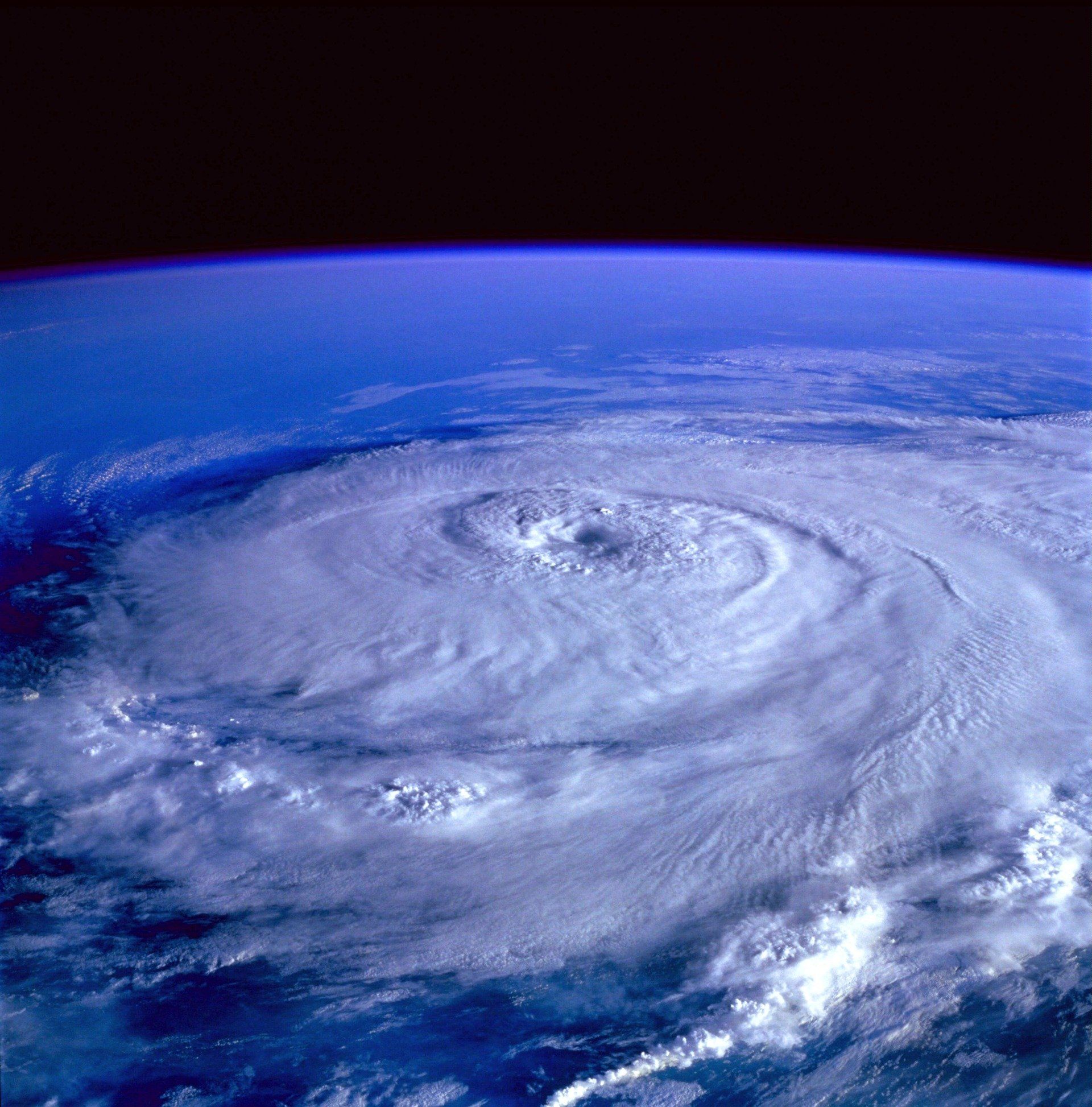
The primary reason for the reduced forecast is the rapid development of El Niño in the Pacific Ocean. El Niño alters weather patterns around the globe. It often intensifies upper-level winds across the tropical Atlantic, producing stronger wind shear that tears apart developing tropical systems before they can organize.
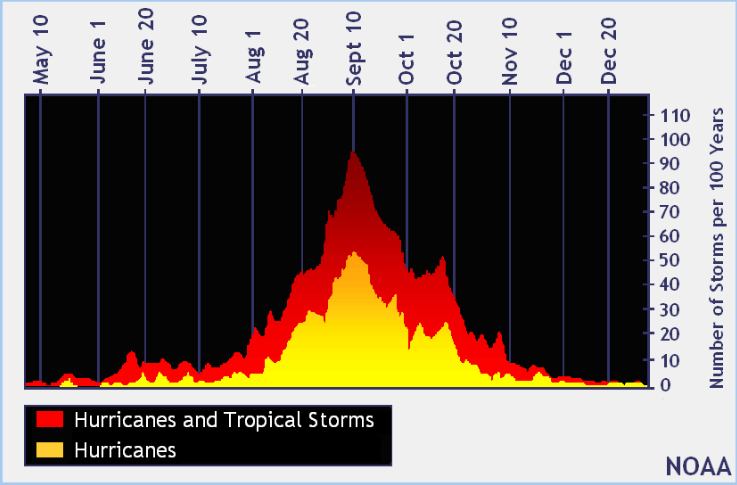
Researchers also expect the El Niño event to intensify during the peak months of the hurricane season. If so, the hostile upper-level winds could continue suppressing storm formation through much of August, September, and October. Those months typically produce the most Atlantic hurricanes.
Even with a quieter season expected, forecasters stress that residents should not let their guard down. Hurricane forecasts cover activity across the entire Atlantic Basin. They cannot predict where individual storms will form or whether any will strike the Gulf Coast or another part of the United States.
History shows that below-average seasons can still produce destructive hurricanes. Only one storm making landfall in a populated area can cause widespread flooding, wind damage, and power outages. Emergency officials continue to recommend reviewing evacuation plans, checking insurance coverage, and keeping disaster supplies ready before the busiest part of the season.
Share this article w/ Friends...