Mobile Bay And Apalachicola Bay Rebuild Historic Oyster Populations
Two historic Gulf Coast fisheries take different approaches to restore devastated oyster populations
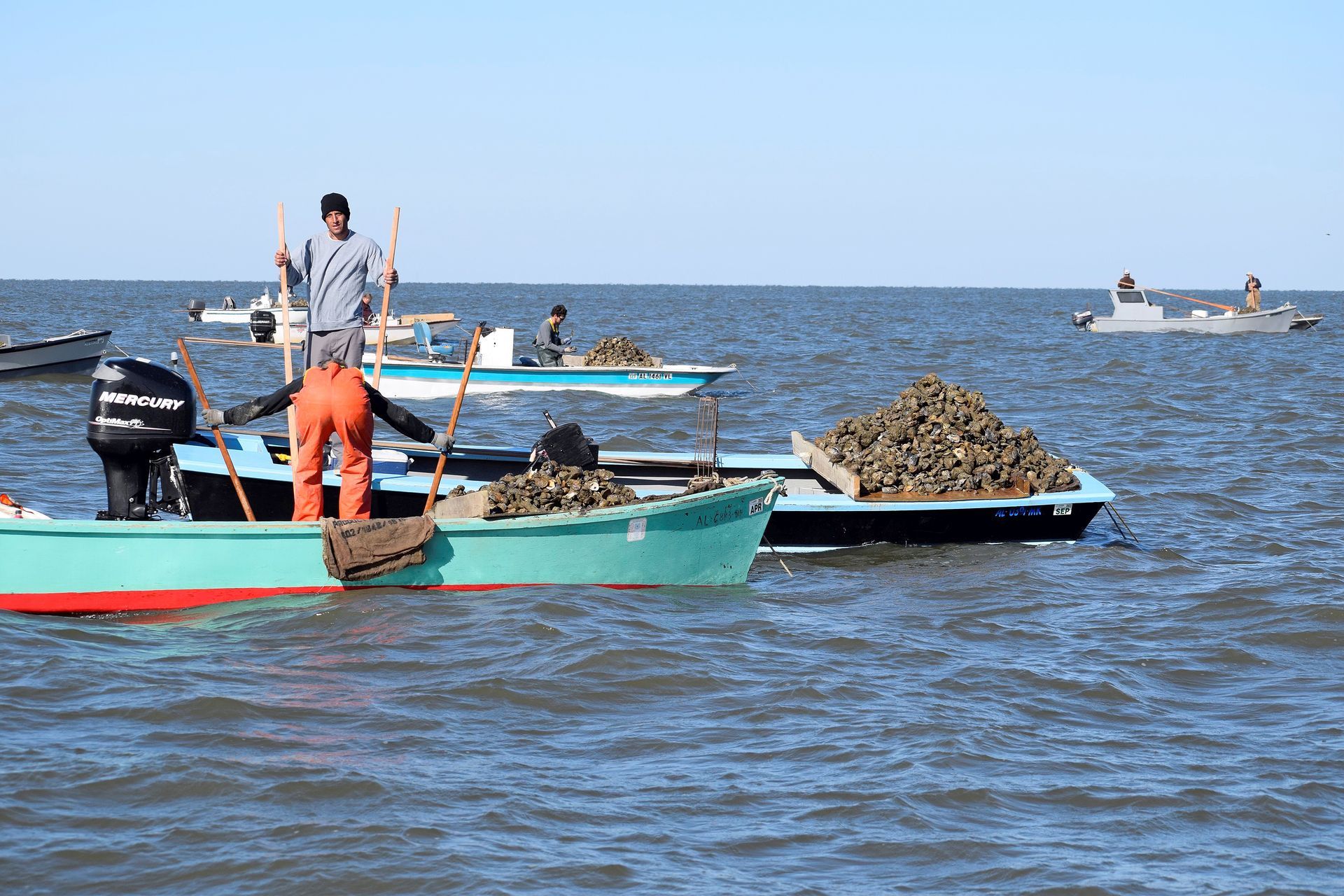
Oysters are a vital cornerstone of the Gulf Coast economy, contributing through the commercial seafood industry, job creation, tourism, and essential ecosystem services like water filtration and coastal protection from erosion and storms. They act as a natural water purifier, provide shelter and food for hundreds of other marine species thus making them essential for the health of the entire ecosystem.
The entire gulf coast has been rebuilding a healthy oyster marine life and the efforts have begun to show dividends.
This week, Mobile Baykeeper's Oyster Keeper team completed its second oyster deployment of the year. The release of 120,000 oysters brings the total to 240,000 oysters placed on restoration reefs in 2025. Meanwhile, Florida regulators have approved a limited-entry management plan for Apalachicola Bay, with commercial harvesting set to resume on January 1, 2026, after the wild harvest moratorium ends on December 31, 2025.
Both bays share deep historical roots in Gulf Coast oyster production. Mobile Bay supported a booming seafood industry dating back to the 1800s, supplying oysters across the region by the early 1900s. Apalachicola Bay earned recognition as the "Oyster Capital of the World," once providing 90 percent of Florida's oysters and about 10 percent of the nation's wild oysters.
Environmental and human factors devastated both ecosystems over time. In Mobile Bay, overharvesting, pollution, and habitat loss reduced oyster numbers dramatically through the late 20th century. Apalachicola Bay experienced a steep decline beginning in 2012, with landings plummeting from over three million pounds of oyster meat in 2012 to just 18,000 pounds in 2020.
The Apalachicola collapse resulted from multiple causes working together. Droughts in 2011 and 2012 reduced freshwater flow from the Apalachicola River, causing salinity levels to rise dramatically. High salinity allowed oyster predators, parasites, and disease-causing organisms to thrive. Florida permitted unprecedented levels of oyster harvesting during critical years, depleting adult spawning stock and removing shell material that juvenile oysters need to settle and grow.
The U.S. Supreme Court ruled unanimously in favor of Georgia in April 2021 after Florida sued over upstream water use. The court concluded that Florida failed to prove Georgia's water use caused the collapse, noting Florida's own management failures in overharvesting and inadequate shell replacement were key contributors.
Mobile Bay's restoration approach focuses on active deployment and community partnership. Mobile Baykeeper's team, joined by volunteers and scientists, placed the new batch of oysters on carefully built reefs in coastal Alabama. The oysters, grown from spat attached to volunteer piers, are part of efforts supported by Impact 100 Baldwin County, Auburn University Marine Extension and Research Center, and Alabama Coastal Foundation.
The Alabama Coastal Foundation's shell recycling program transforms discarded shells into homes for new oysters. These shells form the base of future reefs, creating natural barriers that protect shorelines from erosion and storm damage. The reefs also provide habitats for fish, shrimp, crabs, and other marine species, strengthening the entire coastal food web.
Healthy oyster reefs bring substantial environmental benefits to bay ecosystems. A single adult oyster can filter up to 50 gallons of water a day, helping clean and clarify the water. As oysters grow, their shells form structures that support countless marine species and protect coastal areas from storm impacts.
Apalachicola Bay has adopted a science-based management system following its five-year closure. Since 2019, Florida has invested over $38 million in restoration activities to expedite recovery of the Apalachicola Bay ecosystem. Current restoration utilizes large chunks of Kentucky Blue limestone placed at one-foot and two-foot heights to test optimal structure for oyster settlement.
The limestone size was specifically chosen to remain compatible with traditional oyster tongs used by local harvesters. Researchers found that placing loose shells directly on mud did not work because the material was moved and buried. The Oyster FARMS initiative monitors water quality continuously at farm sites using high-resolution dataloggers that take hourly measurements of temperature and salinity.
The Florida Fish and Wildlife Conservation Commission has fundamentally shifted the fishery from open access to a highly restrictive system. The initial commercial season will run from January 1, 2026, through February 28, 2026, with future seasons running from October through February. Harvesting is restricted only to reefs that meet a minimum of 400 bags of legal-sized oysters per acre.
The harvest level is capped at a maximum of 10 percent of standing abundance in open areas to protect spawning stock. Commercial harvesters require a Commercial Apalachicola Bay Endorsement, with qualification requiring documented prior harvest and sale of wild oysters between 2012 and 2020. The number of qualified endorsements issued for the initial 2026 season will set the permanent cap for all subsequent seasons.
Recreational harvest will be limited to 245 Apalachicola Bay Recreational Opportunity Permits distributed through a random lottery for the 2026 season. Commercial harvesters must report their trips, harvest location, and dealer using the FWC Oyster Harvest App. While some local oystermen express concerns about the restrictions, regulators stress the need to start conservatively to ensure long-term stability.
The collapse caused cascading social, cultural, and economic impacts throughout the Apalachicola community. Many residents lost employment or supplemental income and were forced to find multiple jobs or shift business models entirely. The collective identity of the region as a working waterfront shifted as oyster houses closed and the landscape changed.
Tourism has grown immensely since the collapse, with the area being discovered as a vacation destination. Visitors are often unaware the wild fishery has been closed. The "Forgotten Coast" brand has attracted new economic activity, though concerns remain about the community's changing identity without its historic oyster industry.
Beyond environmental benefits, oyster restoration revives local traditions and industries tied to bay histories. Community groups, marine scientists, and fishermen see these projects as ways to connect people with the water while safeguarding livelihoods. Every new deployment and management decision represents a step toward recovery through partnership and persistence.
For both Mobile Bay and Apalachicola Bay, the return of oysters signals more than just restoration. The efforts mark resilience and determination to rebuild ecosystems that once flourished along the Gulf Coast. With continued dedication and collaboration, these bays are turning their oyster stories from decline to renewal, proving that fragile habitats can thrive again with time and care.
Restaurant chefs, seafood providers and oyster harvesters across the gulf are cheering the efforts. Now the consumers get to taste the results, which allows the oyster business to once again be profitable.
Share this article w/ Friends...