Alabama Muralist Brings Whimsy and Wonder to the New Foley Community Library
Artist Banks Compton painted murals across 10 states before coming home
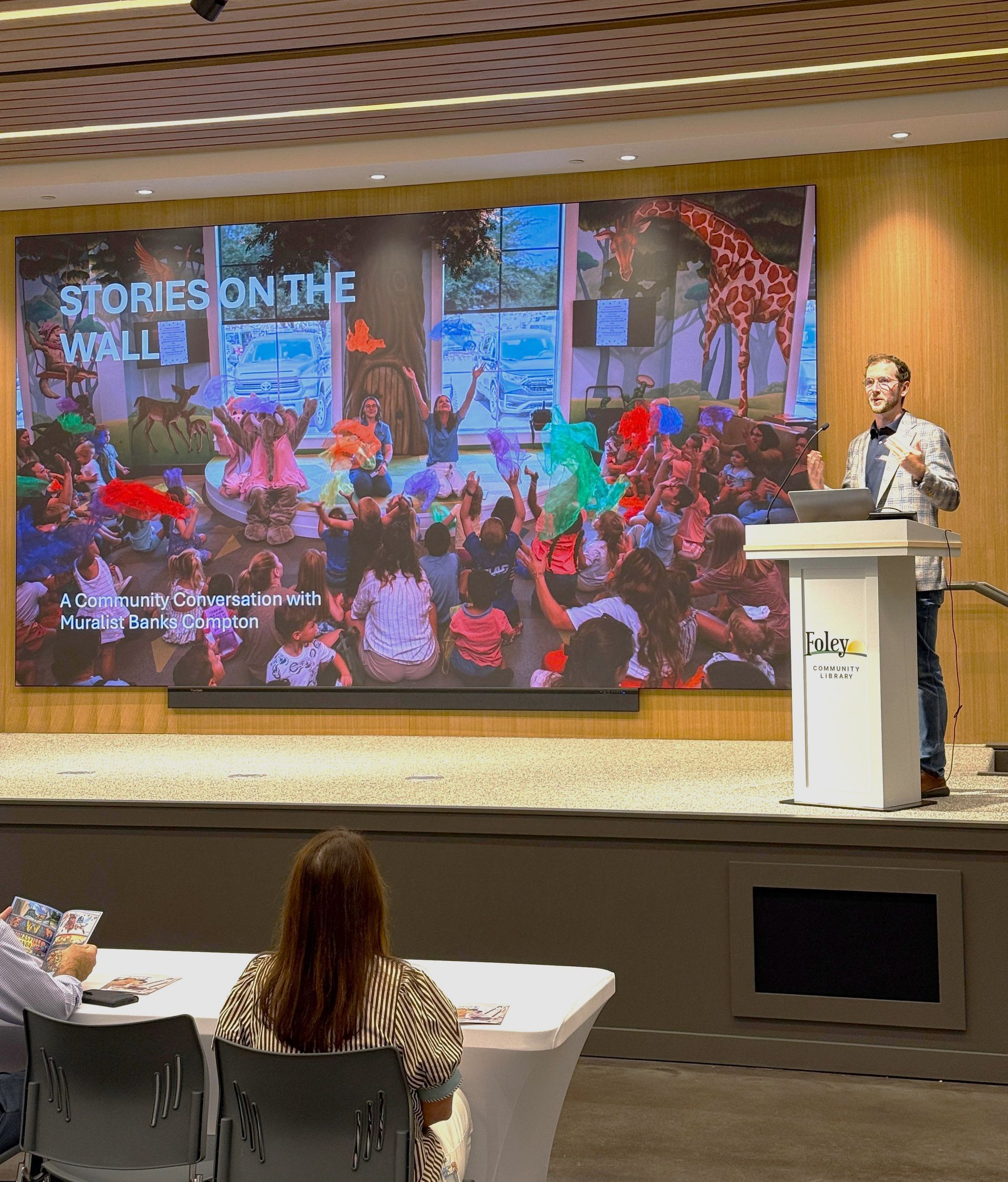
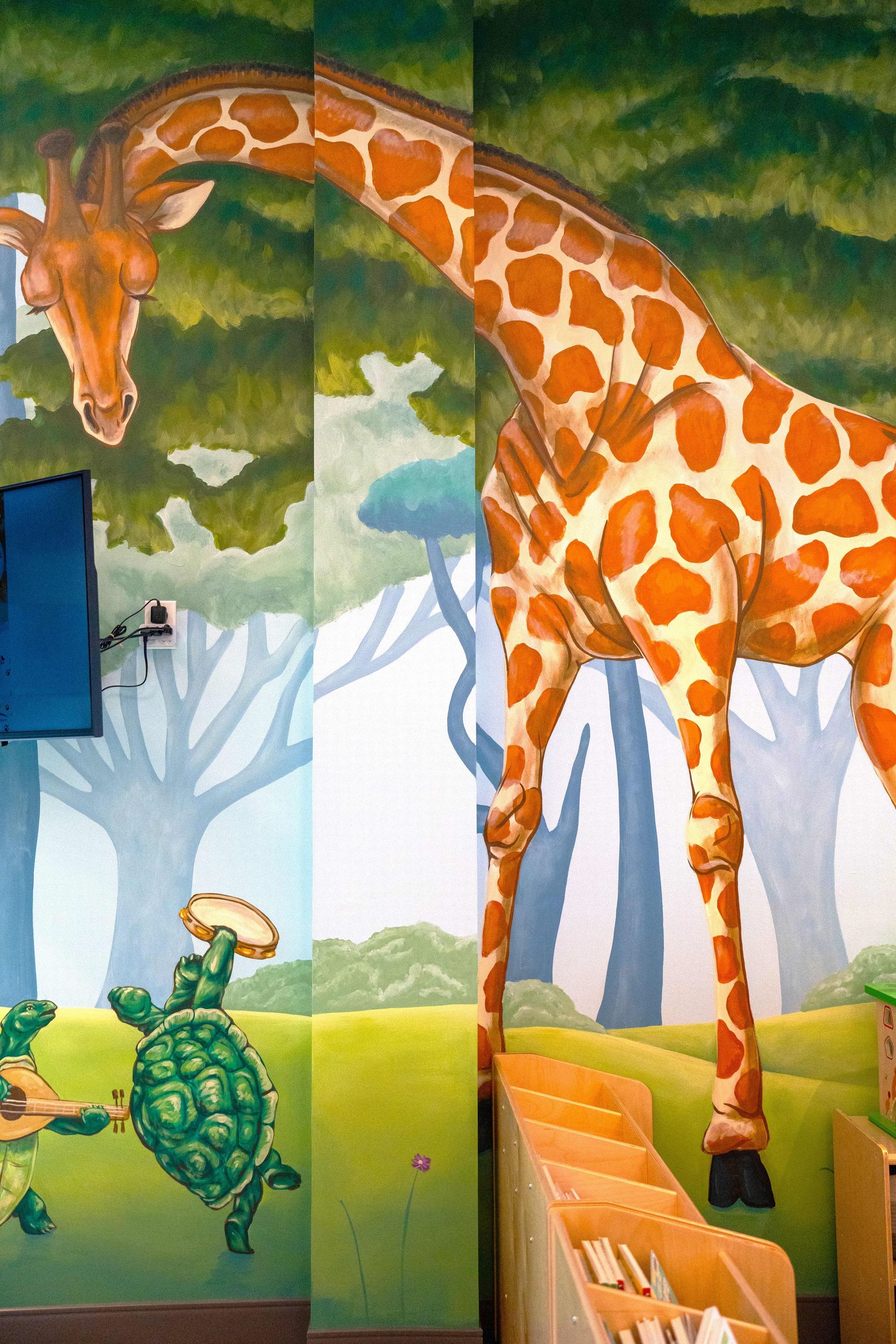
Foley, Ala. — (OBA) — Colorful murals by Alabama artist Banks Compton now cover the walls of the Foley Community Library's Children's Story Grove, inviting young visitors into a world of imagination. The artwork features a cast of whimsical animal characters that have quickly captured the hearts of children and adults alike. Compton, who now lives in Foley, has painted murals in 10 states, but he says this project holds a special place among his work. The new library, which cost $20 million, has become one of the area's most talked-about community spaces.
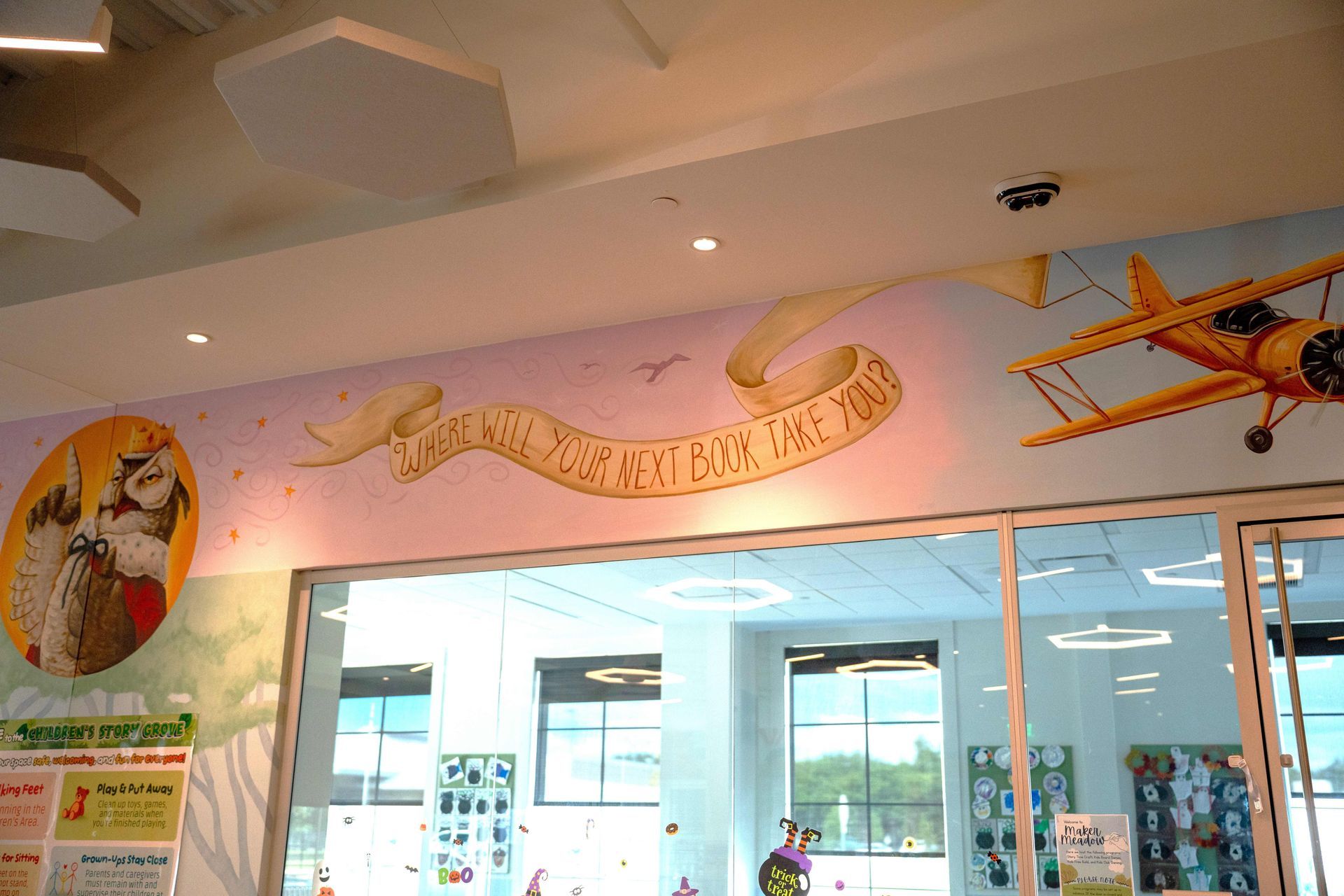
The $20 million Foley Community Library opened in August 2026, with the Children's Story Grove as one of its signature features for young visitors. The area includes a sensory room, separate children's and teens' activity areas, a STEAM-STEM lab, craft activities in the Maker Meadow, and murals by Compton. The three-dimensional reading tree, which also features Compton's sculptures, anchors the space.
Compton said he wanted the murals to feel like a natural extension of Foley and its community.
"This was a completely new children's space, so there was an opportunity to help establish its personality from the beginning," he said. "The goal became to create an environment that felt whimsical, imaginative, and full of discovery. I wanted children to feel like they were stepping into a storybook, but I also wanted it to feel specifically connected to Foley and this community."
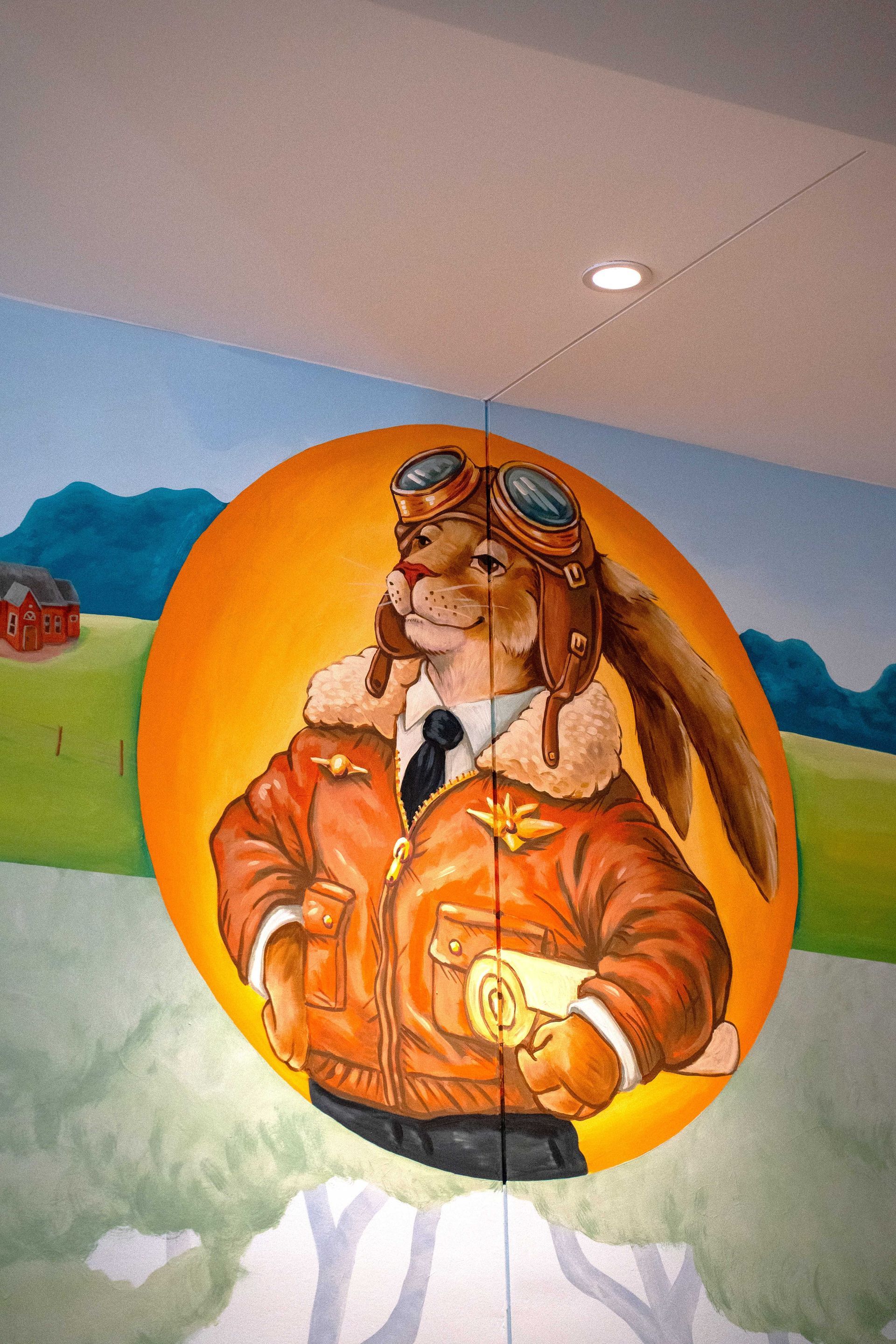
Among the most popular images are a rabbit wearing an aviator's helmet and flying jacket, a lion playing a trumpet, and an owl wearing a crown. After the murals were finished, visitors began naming the animals themselves. The rabbit became Amelia Harehart. The lion was named Lion Armstrong. The owl was christened Prince Albert.
"One of my favorite things that happened after the murals were created was that people started naming the animals," Compton said. "I created something visually, but then the community started giving them personalities and identities. That's something that I really couldn't have designed in advance. To me, that's when public art really starts working. I can paint it, but once people begin creating their own stories around it, it becomes part of their space rather than simply being my artwork."
Foley Library Director Kate Norris said the murals have touched both children and adults who visit the space.
"We watch kids grow up in this library, and they're going to have this for the rest of their lives. They're gonna have this memory," she told Compton. "You have truly made it magical. It is one of my favorite places in the library. If I'm a little gloomy, I'm going to take a walk to the children's section because it is just magical."
Compton said that permanent public art gives children something to grow with over the years.
"Because this is a public building, children can actually grow up with these characters," he said. "They might notice something here at 5 years old that means something completely different to them when they come back at 10. That's one of the things I love about permanent public art, and none of this happens without collaboration. The library knew its audience and its mission much better than I ever could."
Compton is a native of Florence, Alabama, and studied at the Rhode Island School of Design. One of his early career stops was at Kern Studios in New Orleans, where he designed Mardi Gras floats. That experience proved useful during the Foley project, especially for the three-dimensional sculpture portions of the reading tree.
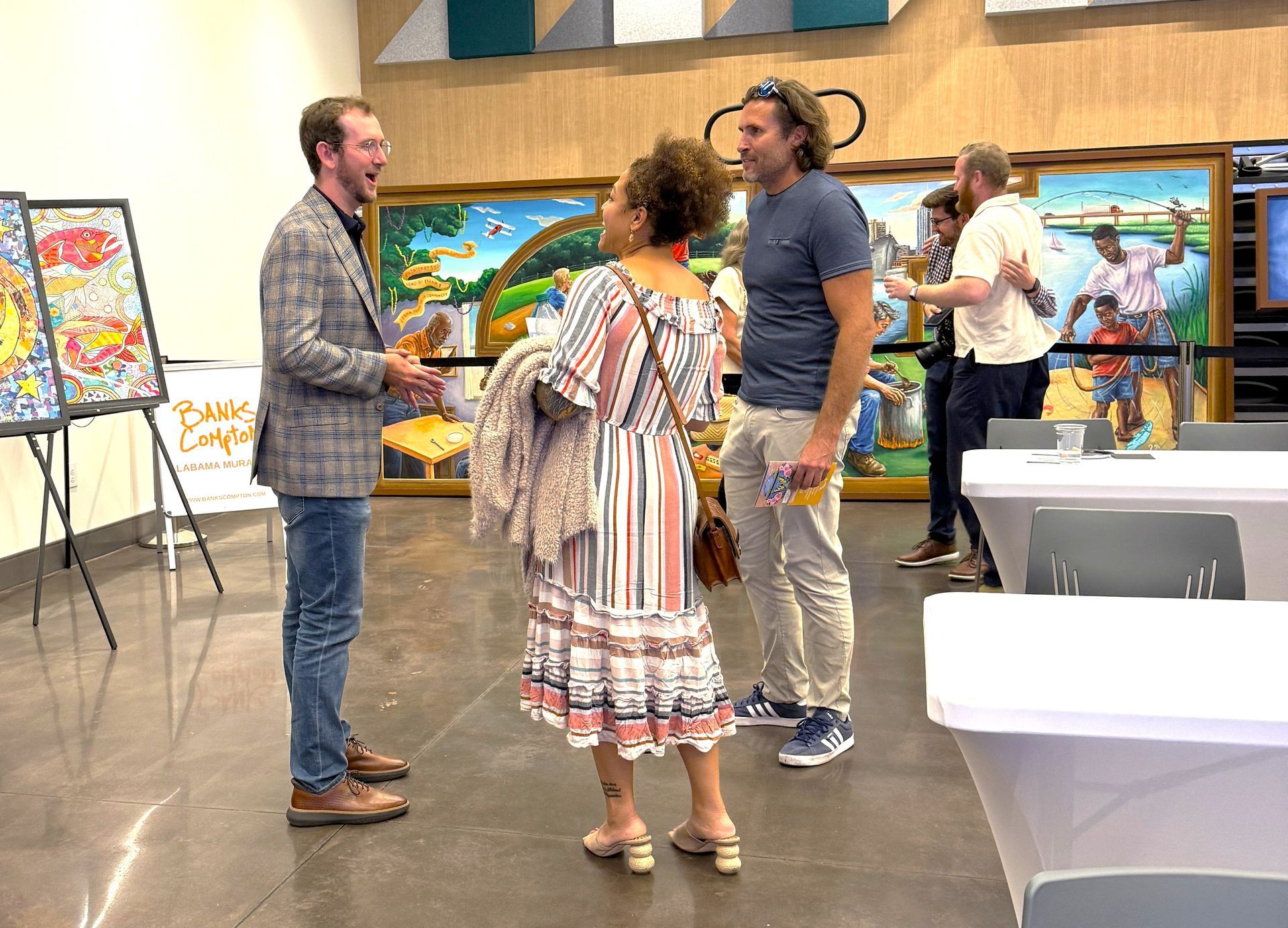
His recent work has focused heavily on education and young people. He painted murals for the Baldwin County Solid Waste Disposal Authority in Summerdale, guiding viewers through the recycling process from start to finish. He also worked with the Mobile County Juvenile Court system and the Strickland Youth Center in Mobile, where some young people involved in the justice system helped paint the murals.
Compton said that every mural project comes with its own unique challenge and purpose.
"Every wall comes with a completely different audience and a completely different purpose," he said. "A mural from a children's library shouldn't solve the same problem as a mural for a recycling center. That's actually one of my favorite things about painting murals: I've had to learn about a place before I can paint it. Sometimes that means learning about local history. Sometimes it means understanding an organization and what it does, and sometimes that means listening to the people who actually use the space."
Share this article w/ Friends...