Seasons of the northern Gulf of Mexico
Northern Gulf of Mexico
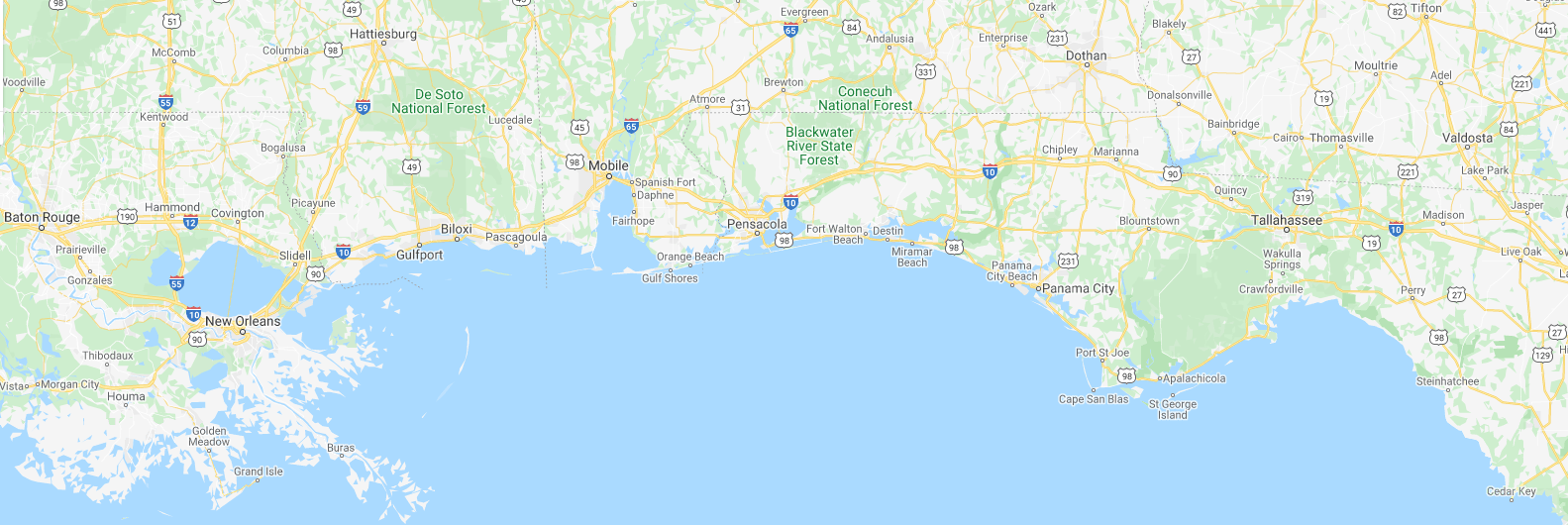
(OBA®) - Orange Beach, AL - The old adage sure rings true 'if you don't like the weather, just wait five minutes' not only about the weather along the south Baldwin coast, but the fertile green Gulf waters and what swims in it too. Throughout the year, at any point in time, a parade of varied sea life may pass by any location. Many of us have long been captivated by the 'what next' aspect of the plethora of life utilizing our skies, beaches and waters.
The numbers of admirers and followers grow each year with new residents and the annual migrations of folks visiting for the first time. Most promise to return so they can delve even deeper into the marvels the Baldwin coastline offers through any season, month or day.
Winter
Winter is most often a time for quiet reflective walks on the beach, as the afternoon temperatures are often quite mild. The Gulf water temperature dips into the lower 60s or even upper 50s at this time, but has a moderating effect on the cold ravages of winter. Native sea life thrives, though at much slower pace with just a few notable exceptions. This is the season of the “snowbirds”. And their casual, laid back lifestyle is well suited to appreciate the occasional glimpses of bottle nosed dolphin, common loons, or sandpipers along the shore. Underneath the chilly water, sheepshead meander into the lower bays and passes. Commonly they can be spied from the Gulf State Park Pier, or Perdido Pass jetty as they nibble on algae and barnacles growing on the hard surfaces. These omnivorous fish are meticulous feeders, content to hunt and peck their meals from these structures in the form of algae or crustaceans. Anglers pursuing them are just as intent to wait patiently with a live shrimp or fiddler crab until a bite comes their way. Passing the times between bites with tales that build camaraderie, bridging both time and distance. And the sunsets are just gorgeous! You see, the sun rises and sets over the Gulf during the shorter days of winter.
Spring
Springtime commands much attention from locals and visitors alike. The sun rises and sets almost parallel to the beaches as the days get longer. And the shallow waters quickly warm up, along with the fishing action. Sheepshead gather into huge spawning aggregates near any coastal structure. And ever increasing numbers of lightning fast Spanish mackerel, the first of the pelagic fish, invade the near shore waters to the delight of 'Spring Breakers'.
Pompano are getting into spawning mode as well, and their numbers swell in the surf zone throughout the season. Even novice surf anglers often find easy limits (3) of these tasty Gulf fish this time of year. The succession of arriving migratory fish species continues through the spring months as cobia, king mackerel and finally jacks dominate the attention of resident anglers and visitors alike. Bottle-nose dolphin and coastal sharks feed more actively in the warmer water and increasing food supply. Often joined by large groups of brown colored cow nose rays (called a “fever”). Other free swimming rays are often observed near shore too. From the solitary Spotted Eagle ray, to small groups of black colored Mobula and Manta rays (called “Devil rays”) , to the gray colored, bottom dwelling stingrays and skates. All these are more likely to be observed and encountered now, since they are more actively feeding and more folks are getting in the water.
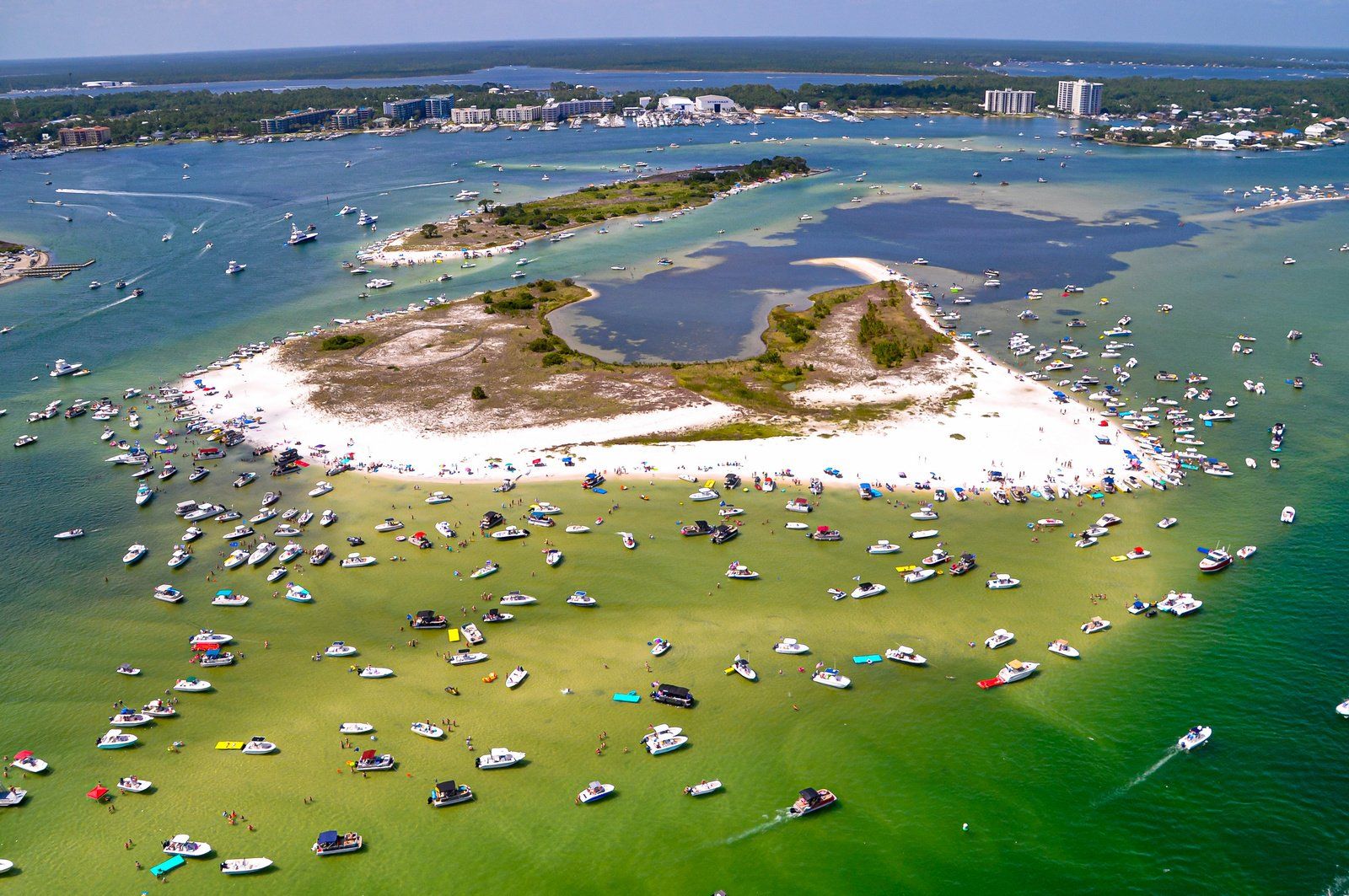
Some may wonder why the waters of the “Emerald Coast” can be so green at times. Then it can look like the “Muddy Mississippi” at other times. Green algae and phytoplankton are often suspended in these nutrient rich waters. Whenever we experience prolonged periods of relatively calm seas and light winds, heavier sediments will settle to the bottom, allowing the water to clear. Sunlight shines through the clear water, and reflects off the shallow, white sandy bottom. This gives us that namesake emerald green color. Conversely, when we experience a stormy period with sustained strong winds and high waves, the sediments are stirred into suspension, and the water gets 'dingy'. It may stay that way for days or weeks at a time after a particularly intense storm.
Many fish species have evolved to continue to find food during these dingy water periods by virtue of acute sense of smell. “Hardhead” sea catfish are the 'poster child' of this type of feeding behavior with their long whiskers around the mouth that extends their sense of taste or smell. The three species of kingfish or king croakers in the Menticirrhus family (locally called whiting and/or ground mullet) have a small 'barbel' underneath the mouth. That organ gives them an acute sense of smell to help them find buried prey items like sandfleas (mole crabs), ghost shrimp, coquina clams, and other small invertebrates that live in the turbulent surf zone. Pompano, and the other drum species have large nostrils to aid them to 'sniff out' prey in the often turbulent surf zone. Their hard bony structures with grinding 'throat teeth' (pharyngeal teeth ) in the back of their throat to crush hard shelled prey items.
Summer
Summer along this stretch of the world begins when the days are longest and the sun gets hottest. This is when the sun rises and sets over the land when viewed from the beaches. Often this season is accentuated by the 'doldrums'. Periods of light winds, interrupted by thundershowers and brief, unpredictable winds. This cycle is what lends our climate to the more 'tropical' aspects of day to day living. And to our love affair with air conditioning and iced drinks. The probability of experiencing tropical activity increases late in the summer, and peaks by mid-September. The midday sun and heat can be brutal, with diurnal temperature spikes near 100 degrees. But a diverse number of terrestrial, avian, and aquatic species have adapted to thrive even under these harsh conditions.
Salty water in the upper 80s to near 90 often gives rise to swarms of jellyfish which can hatch, grow, breed, and die in just a matter of a few weeks. While many species can be found along the Baldwin coast, only a few have painful stings. Atlantic stinging nettle jellyfish are the most common, and though not usually serious, they affect many swimmers along the coast. The blue colored, floating Man-o-War jellyfish has a much more powerful sting and more formidable reputation. Fortunately, they are relatively rare, and usually only show up after a prolonged period of onshore (southerly) winds.
Another local phenomenon of the summer doldrums is the annual 'die-off' of Scaled and False herring. These silver sided four to six inch long filter-feeding herring only live a couple of years (IF they are lucky). Pretty much any predatory fish with a mouth big enough to swallow one, will eat them, or at least take a bite out of them. Often after spawning, these forage fish are exhausted, and may succumb to parasites in their gills, oxygen deprivation, overcrowding, or outright predation. Mackerel, bluefish, jacks, redfish, tarpon, Bonita, sea trout and other fish will constantly prey on herring when they are available. Often these predators are joined by sharks, sea turtles, pelicans, ospreys, gulls and terns. Nothing gets wasted in nature.
Warm sea water and particularly high nutrient levels may well influence the growth and scope of a free-floating, filamentous green algae referred to as “June Grass.” Outbreaks are much more common farther east along the Florida Panhandle beaches, but every few years it may extend into Alabama waters. The duration of the outbreaks are dependent on a variety of environmental factors that may be exacerbated by human events such as sewage spills that temporarily increase the nutrient levels in the water. The event we experienced in 2021 from late spring through the middle of summer is the longest many longtime Baldwin County residents can remember, and certainly the worst in 20 years.
Another vegetative impact on the coastline is the occasional influx of Sargassum Grass. The brownish floating macro-algae is found throughout the temperate seas of the world. It has no 'roots', but grows in thick mats that drift with ocean winds and currents. At times, like prolonged periods of southerly winds, tons of these plants may drift on shore here. The minor inconvenience experienced by swimmers, fishermen and beach walkers is fairly short lived (a few weeks). And once it washes ashore, the grass quickly dries out and disintegrates, lending valuable nutrients to our sandy, otherwise sterile beaches. While in the water, a host of fish and invertebrate species utilize Sargassum as a sea-going nursery. It is considered “essential habitat” by governments worldwide. Even sea turtles use it, for protection while young, and as food later in life. Once onshore the grass mats are used by beach ghost crabs as food and cover.
Fall
Fall along the Baldwin coast is sometimes difficult to pinpoint because the effects of summer often linger for so long. But generally, as the days get increasingly shorter, subtle changes take place along the beach and in the water. For one, the sun rises and sets near the coastline when viewed near the beaches. Which precise weeks that occurs varies slightly as the angle of each beach varies a few degrees relative to sunrise or sunset from location to location. And the effects of strong storms may greatly affect the nature and orientation of our white sandy beaches as well as sea level temporarily.
Share this article w/ Friends...