Orange Beach Residents Push Back Against Proposed Pirate Dinner Theater
Traffic, trees, and community character take center stage at Orange Beach Town Hall.
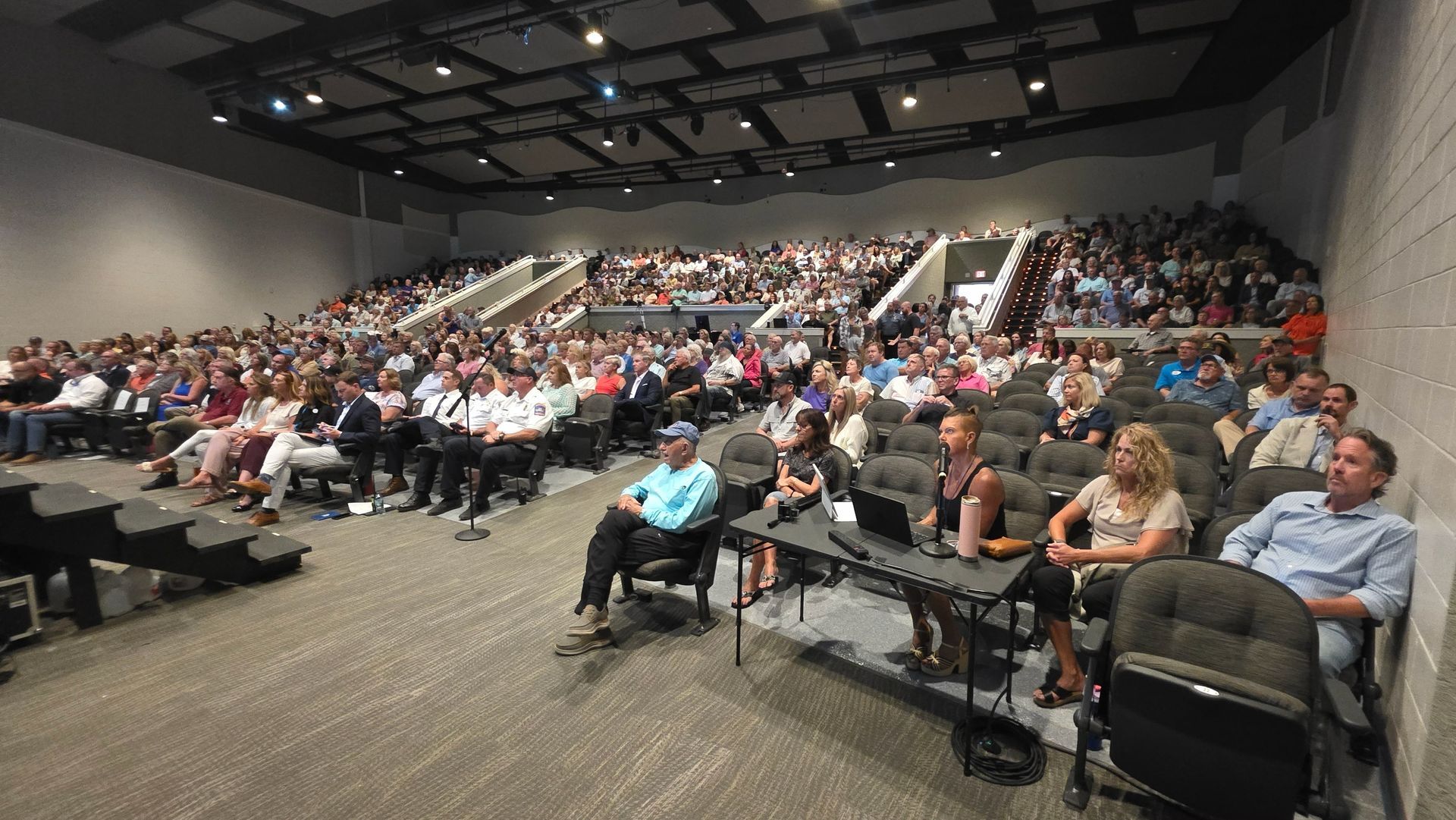
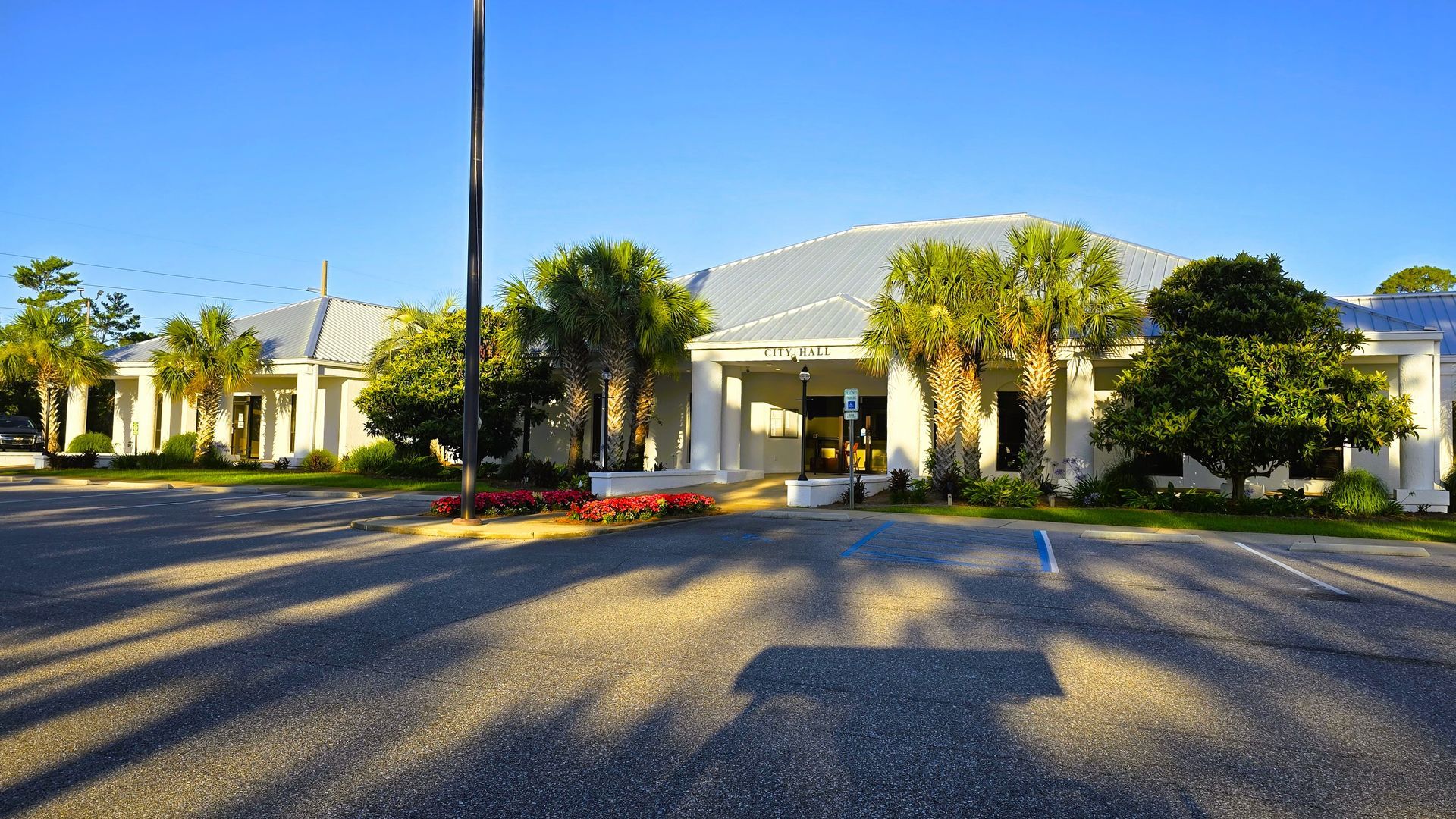
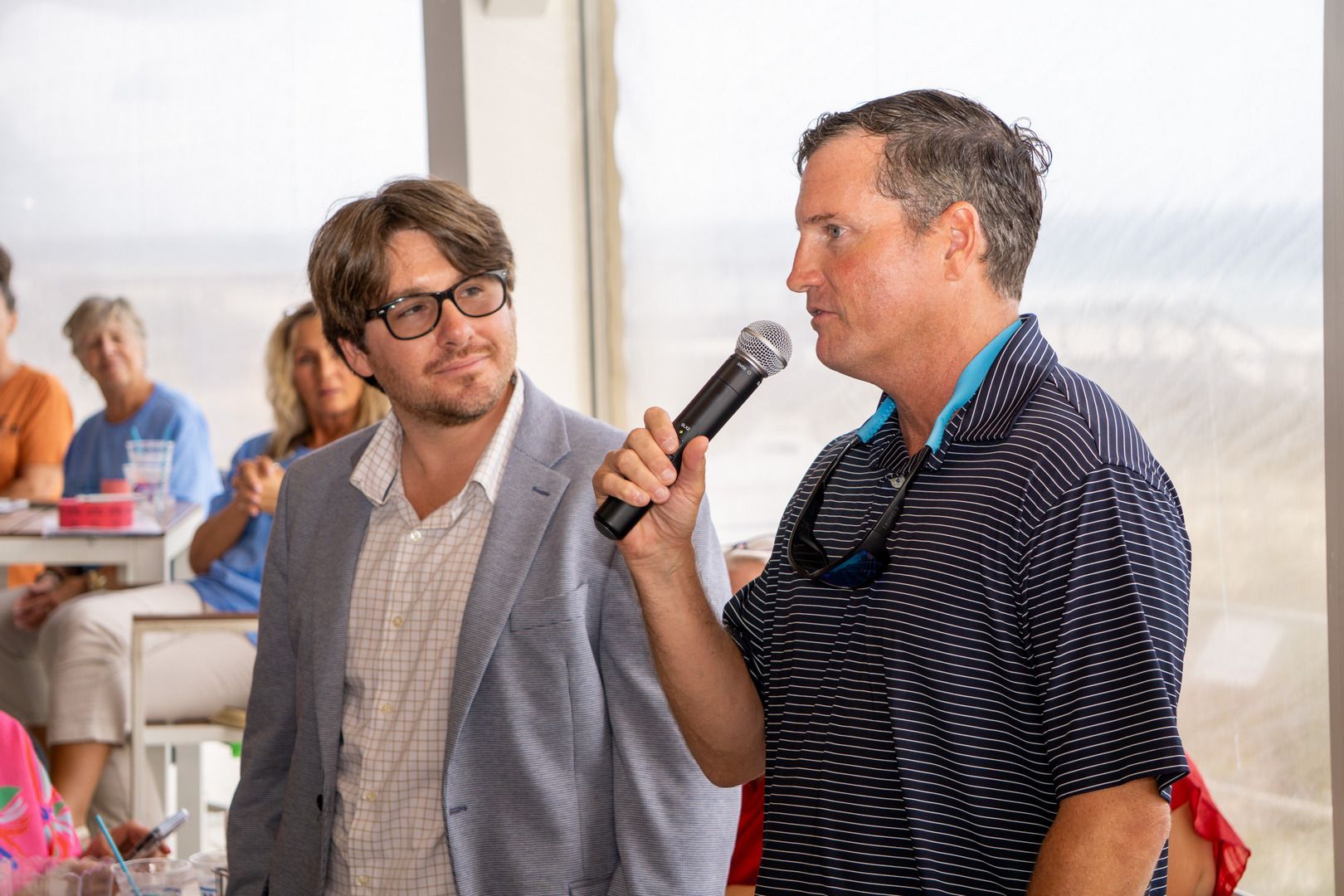
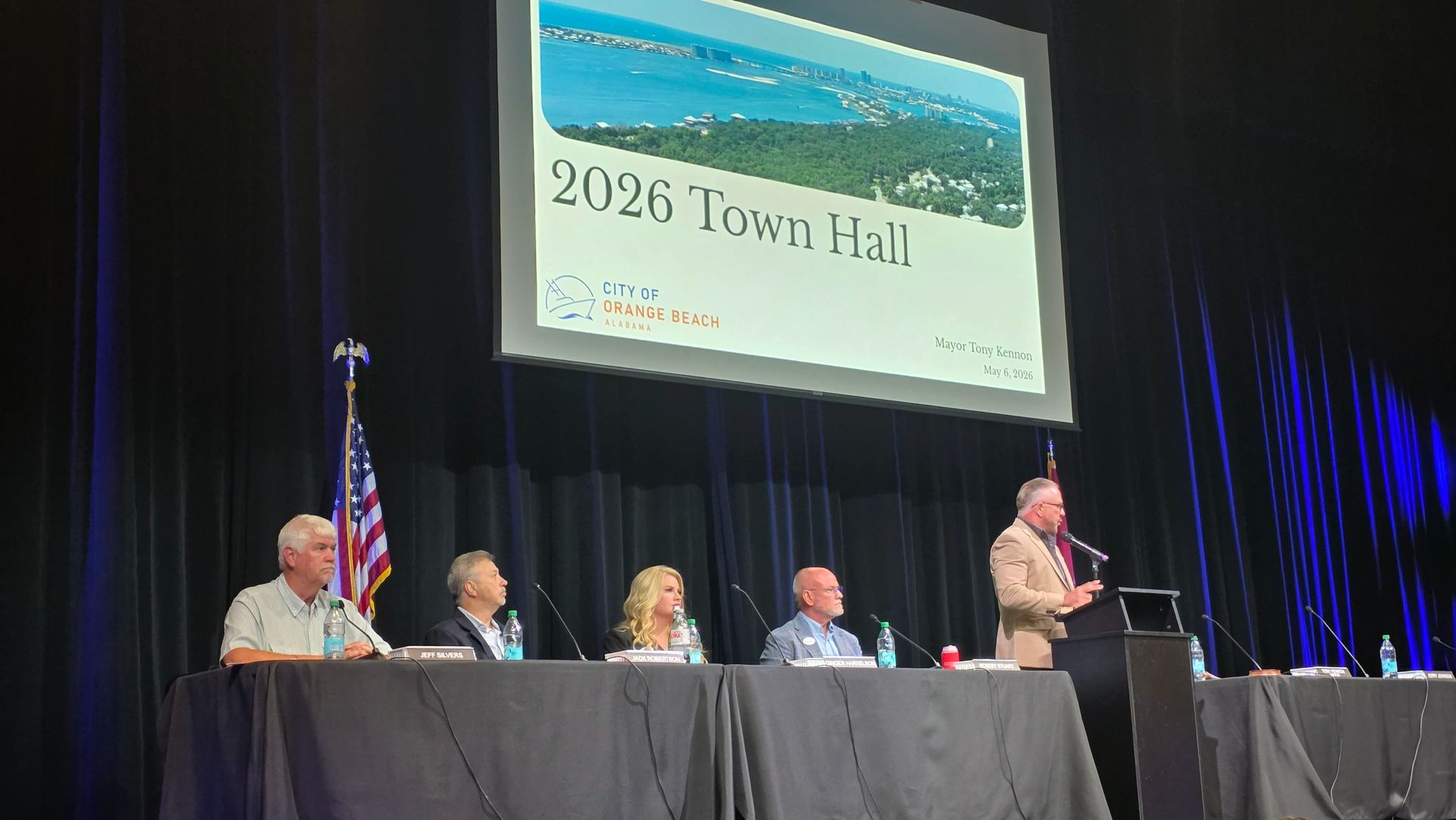
Orange Beach, Ala. — (OBA) — Orange Beach residents packed a town hall meeting Wednesday night with standing room only. Residents voiced concerns about a proposed pirate-themed dinner theater that could be built on a 24-acre property near Terry Cove across from the Dollar General. The proposed Pirates Voyage Dinner Theater project has become one of the most talked-about development proposals in the city in recent history. Dozens of residents spoke during the meeting, strongly opposing the location. City leaders, including Mayor Tony Kennon, spent much of the evening explaining the review process and presenting data to help residents understand what is at stake.
The property sits along Orange Beach Blvd. (Highway 161) and is currently zoned for a mobile home park. Besides last night’s Town Hall Meeting (on May 6, 2026), two more meetings related to the project are scheduled. One with a planning commission review scheduled for May 11 and a council vote on the project set for June 2. The Mayor explained that the developer has applied for a Planned Unit Development (PUD) designation — a special zoning category for projects that do not fit neatly into standard zoning rules. He stressed that a PUD requires approval from the mayor and council and is never used to bypass existing zoning laws.
The Mayor laid out several alternatives that could be built on the property without any council approval. Under current "By Right" zoning, the 24 acres could be developed into a mobile home park with 99 double-wide homes, an RV park with up to 198 spots, and 16 vacation rental duplexes, or a large retail center. He argued that each of those options would generate far more traffic and far less predictable activity than a dinner theater with set show times. "The more predictable a traffic pattern is, the better you can deal with it," he said.
Traffic was one of the biggest concerns raised by residents throughout the night. The mayor said a sold-out show would bring roughly 285 cars to the site, with an average of 3.5 to 4 people per vehicle, given the family-friendly nature of the event. He said those cars could be cleared from the property in five to ten minutes and that show times are scheduled to coincide with the slowest traffic periods on Highway 161. He also said a police officer would be on hand to direct traffic when needed, similar to what is done at local churches on busy weekends.
State transportation officials from ALDOT have rated Highway 161 as an "A, B" — meaning it is operating at about 70 percent of its capacity, with an average daily traffic count of 28,400 vehicles. The mayor noted that under state law, a development cannot be rejected on traffic grounds alone if the state determines the road can handle it. A full traffic impact study has not yet been completed, but the mayor said it will be reviewed during the permitting process and will determine the type of access — right-in, right-out only, or full access — allowed at the site.
One resident raised a pointed question about the engineering drawings presented at the meeting. She noted that the site plans were stamped with "Pirates Voyage" listed as the owner and asked why the company had not yet been required to conduct a traffic impact assessment. "Why have they not been asked to do a traffic impact assessment, which is standard protocol for a major impact development?" she asked. City officials acknowledged that the study had not been completed but said it would be required before any permits are issued.
The city has been negotiating with the developer on a potential arrangement under which the city would purchase 12 of the 24 acres. The mayor said the goal of that purchase would be to redirect drainage away from Terry Cove and to preserve trees and natural land. Currently, water on the property flows south into Terry Cove. The proposed plan would regrade the land, so water flows north into a conservation area. The property is under contract with the developer, and the city has not yet committed to buying any portion of it.
Several residents pushed back on the idea of the city spending public money to solve a drainage problem created by a private development. "Our ordinances require that water on their property be maintained on their property," one resident pointed out. The mayor acknowledged the concern but said the flat terrain of the area makes water management a persistent challenge across the entire island and that buying the land would serve multiple public interests beyond just drainage.
A resident of Harbor Ridge near Terry Cove praised the city's overall direction but urged leaders to think carefully before approving the project. "You've done a phenomenal job; I'm proud to call Orange Beach home," she said. She suggested the property could instead become a dog park, a kids' splash pad, or a community gathering space. She also expressed concern about the loss of bird habitats and natural tree cover, which she said makes the area special for both residents and visitors.
A nine-year-old resident addressed the council directly, making a case for protecting the trees on the property. "Trees give us shade when it's hot, help keep the air clean, and provide homes for wildlife," Armstrong said. The young speaker suggested the city consider new rules to protect mature trees and require developers to plant full-grown replacements rather than small saplings. The mayor acknowledged that under current city ordinances, development cannot be stopped because of trees and that a developer who removes a 12-inch tree is only required to replant three 4-inch trees in its place.
Brian Dale, a resident of St. Lucia Drive in the Terry Cove neighborhood, cited the city's 2020 comprehensive plan, which covers 2020 to 2035. He said the plan calls for improving the Gateway District along Highway 161 through landscaping, architectural standards, and pedestrian-friendly design. He argued that a large commercial dinner theater does not fit that vision. "The Pirates Voyage Dinner Theater is not part of the character of Orange Beach," he said, echoing a sentiment shared by many in the room.
Not everyone at the meeting was opposed to the project. One resident argued that the development would bring significant revenue to the city. "The money that this will bring to us will make that school system even better," he said. He urged the council not to move the project north of the bridge.
A resident of Perdido Key told the council that the legal risk of rejecting the proposal would be "nominal or minimal at best." He suggested the city could table the project and revisit it later, potentially purchasing a portion of the property at a future date. The mayor said the council would weigh all options carefully, including the possibility of buying the land outright. He noted that the city has purchased roughly $60 million in property over the years for public benefit, including a golf course that helped address drainage problems in surrounding neighborhoods.
The council vote is not scheduled until June 2, but the discussion made clear that the community does not support the project in its current location. Most residents seem to want the project moved north of the bridge. A few want it stopped entirely. The mayor reminded attendees that something will eventually be built on the property regardless of what the council decides and that the choice is not between development and no development — it is between different kinds of development. The planning commission review and the council vote are expected to bring the issue to a head in the coming weeks.
Share this article w/ Friends...