Army Corps and Coast Guard Coordinate on Foley Cut Navigational Safety
Federal agencies and local mariners collaborate to balance commercial and recreational boat traffic on the Intracoastal Waterway
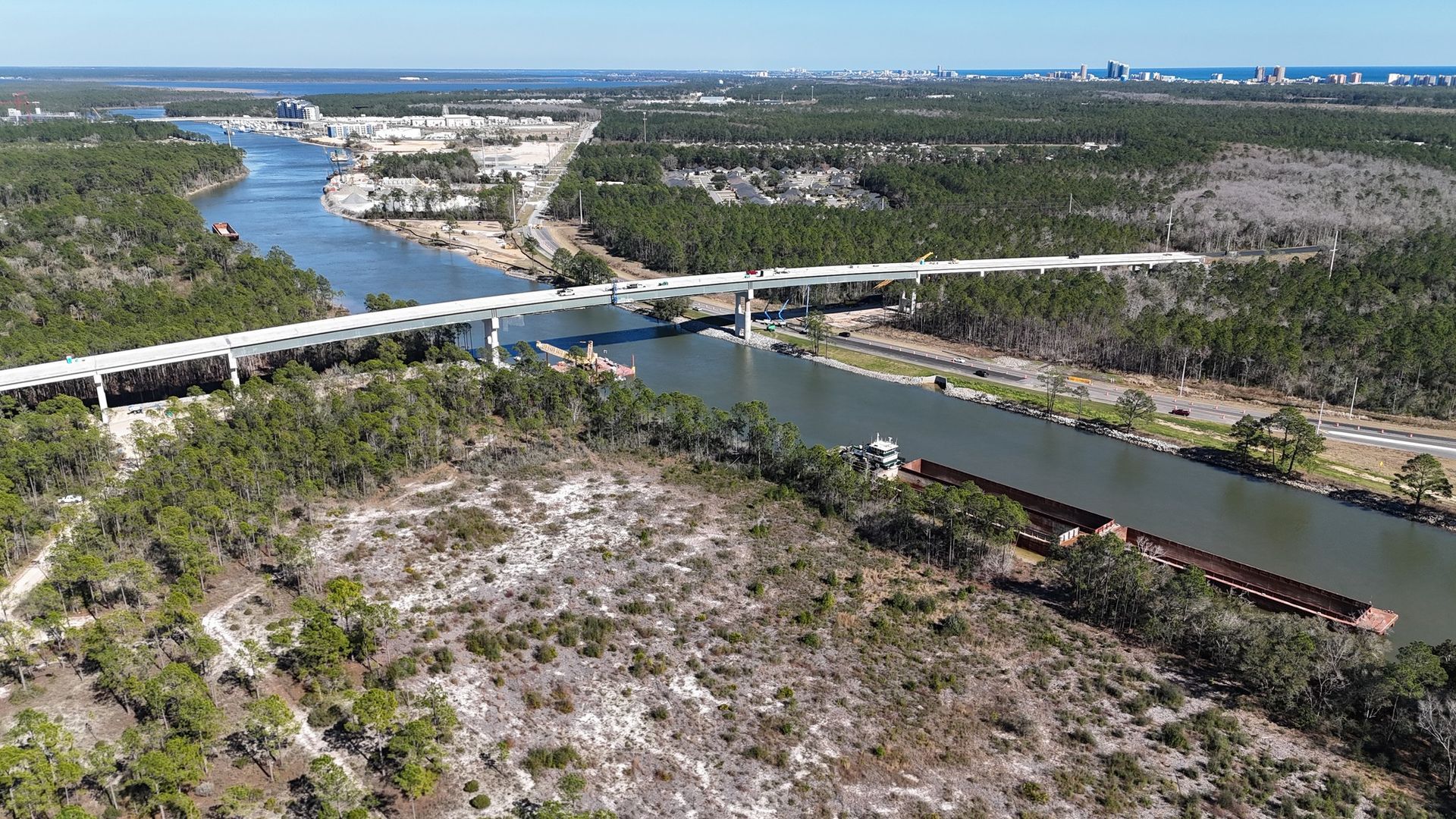
Orange Beach, Ala. — (OBA) — The U.S. Army Corps of Engineers and the U.S. Coast Guard are working together to support proactive navigational safety along the Gulf Intracoastal Waterway in southern Baldwin County. The effort focuses on the Foley Land Cut, where commercial barges and recreational boats share the narrow channel. Officials are collaborating with local stakeholders to ensure the safe, efficient use of the waterway.
The Foley Land Cut is a 10-mile, man-made navigation channel running through southern Baldwin County, including Gulf Shores and Orange Beach. The Army Corps of Engineers maintains the channel, which serves as a transportation route for commercial vessels and provides access to local marinas and recreational boating areas.
In a
report released Tuesday, November 17, 2026, the Army Corps of Engineers announced its participation in a Ports and Waterways Safety Assessment workshop. The Coast Guard led the meeting at the Baldwin County Emergency Operations Center.
Commercial barges use the waterway to transport goods throughout the Gulf Coast region. Fishing boats, charter vessels, pontoon boats, and other recreational vessels also use the channel, creating challenges for both commercial operators and recreational boaters.
The workshop brought together barge captains, marina owners, marine patrol officers, federal engineers, local government officials, and recreational boaters. Participants discussed their experiences on the waterway, evaluated existing risk-management measures, and examined practical strategies to improve navigation.
The workshop focused on three primary objectives:
- Identifying navigation and safety concerns related to the channel's layout and boat traffic patterns.
- Evaluating the effectiveness of existing safety measures.
- Developing possible solutions for federal agencies and local partners to consider.
Army Corps engineers also provided information on channel conditions, dredging schedules, and waterway infrastructure. The Corps is responsible for maintaining the federal navigation channel and ensuring its continued availability for commercial and recreational use.
The assessment focused strictly on operational safety, not construction or land-use approvals. Organizers emphasized that the workshop was not a regulatory permitting decision and did not evaluate any individual development projects. Instead, the meeting served as a collaborative forum to build a shared understanding of the waterway's daily operational dynamics.
Information gathered during the workshop will guide future efforts by federal agencies and local officials. The goal is to maintain a safe waterway that supports commercial shipping, recreational boating, tourism, and the local economy.
Share this article w/ Friends...